
Last updated November 14, 2026
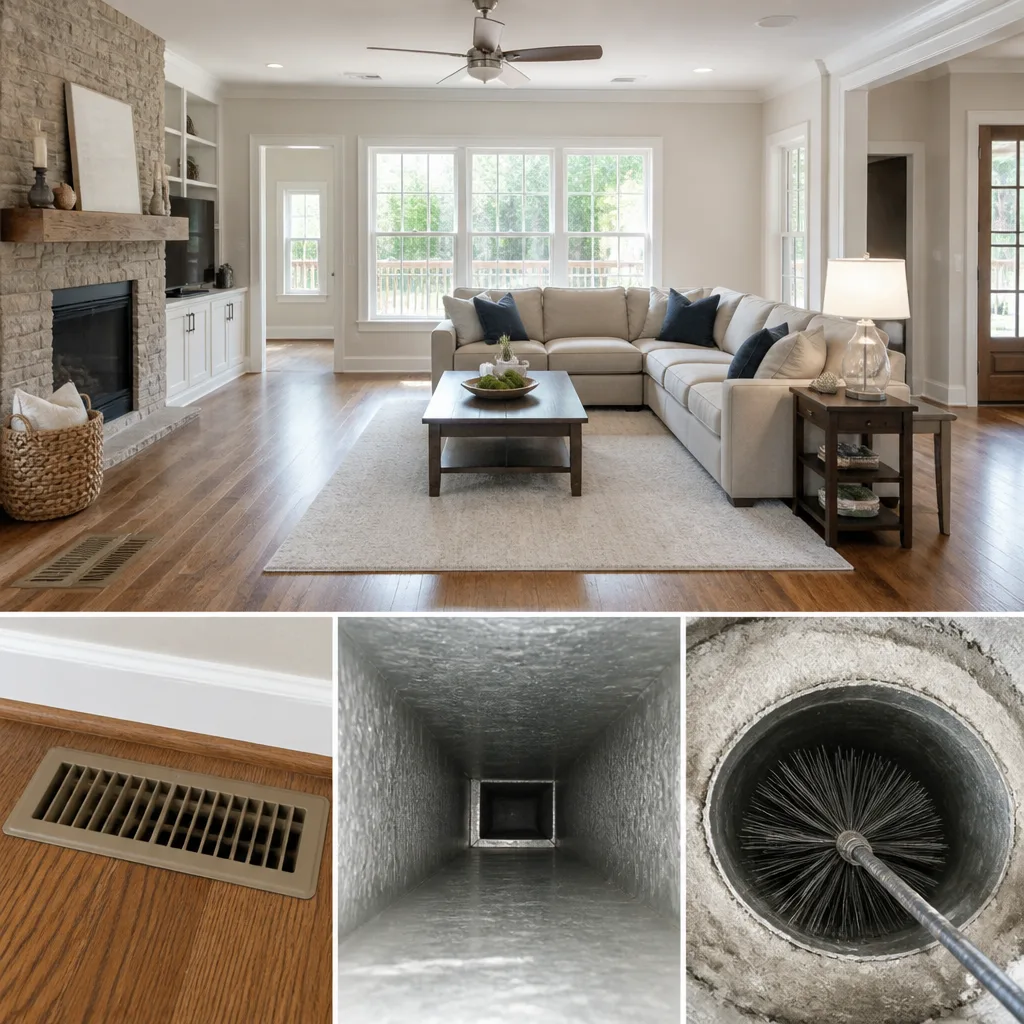 Whole-home duct cleaning
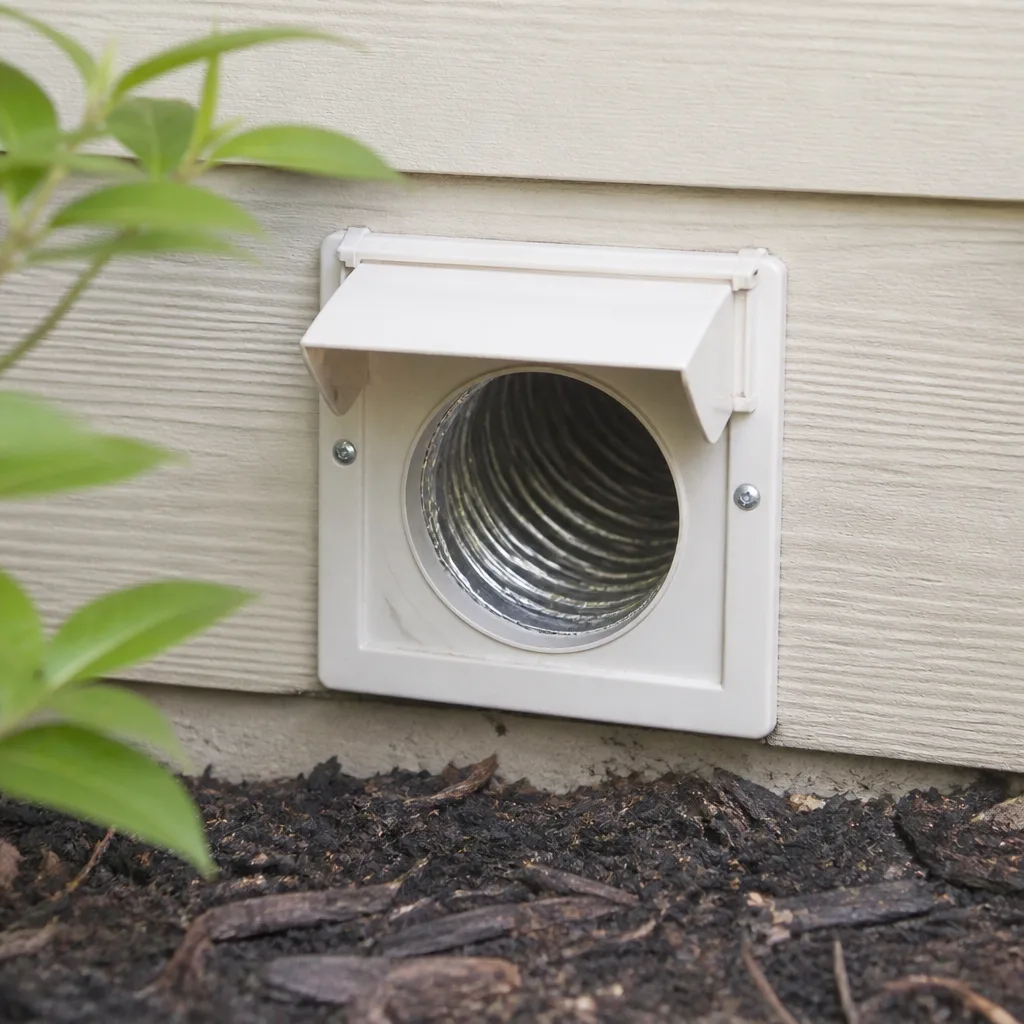 Dryer vent cleaning
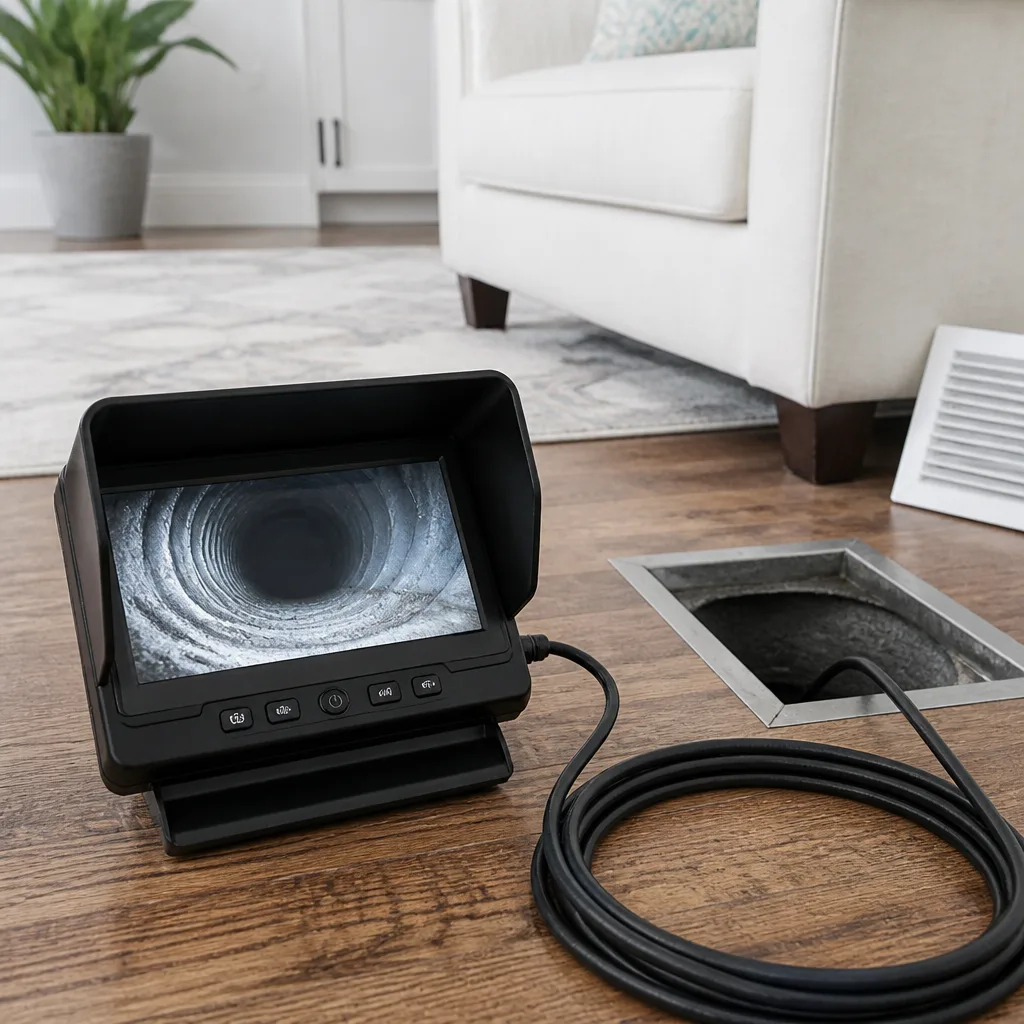 Camera inspection
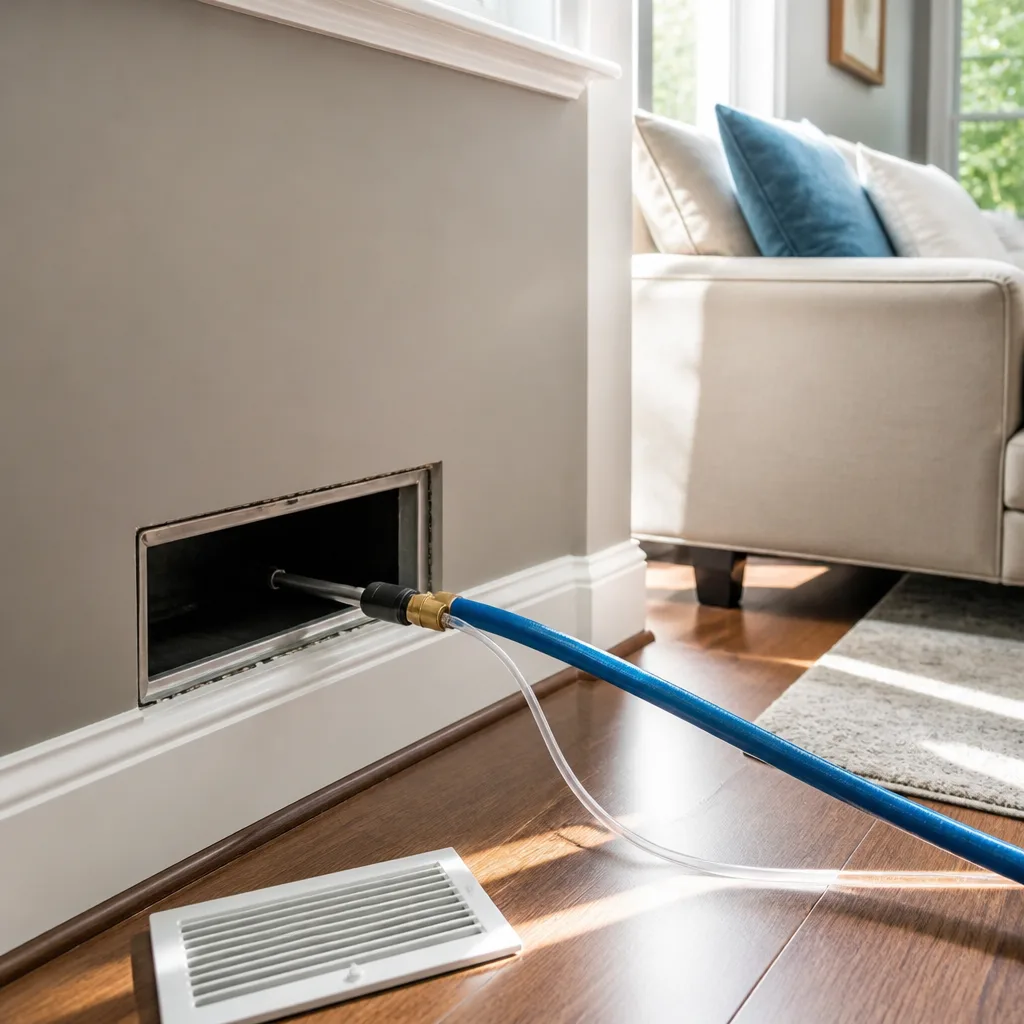 Sanitizing & deodorizing
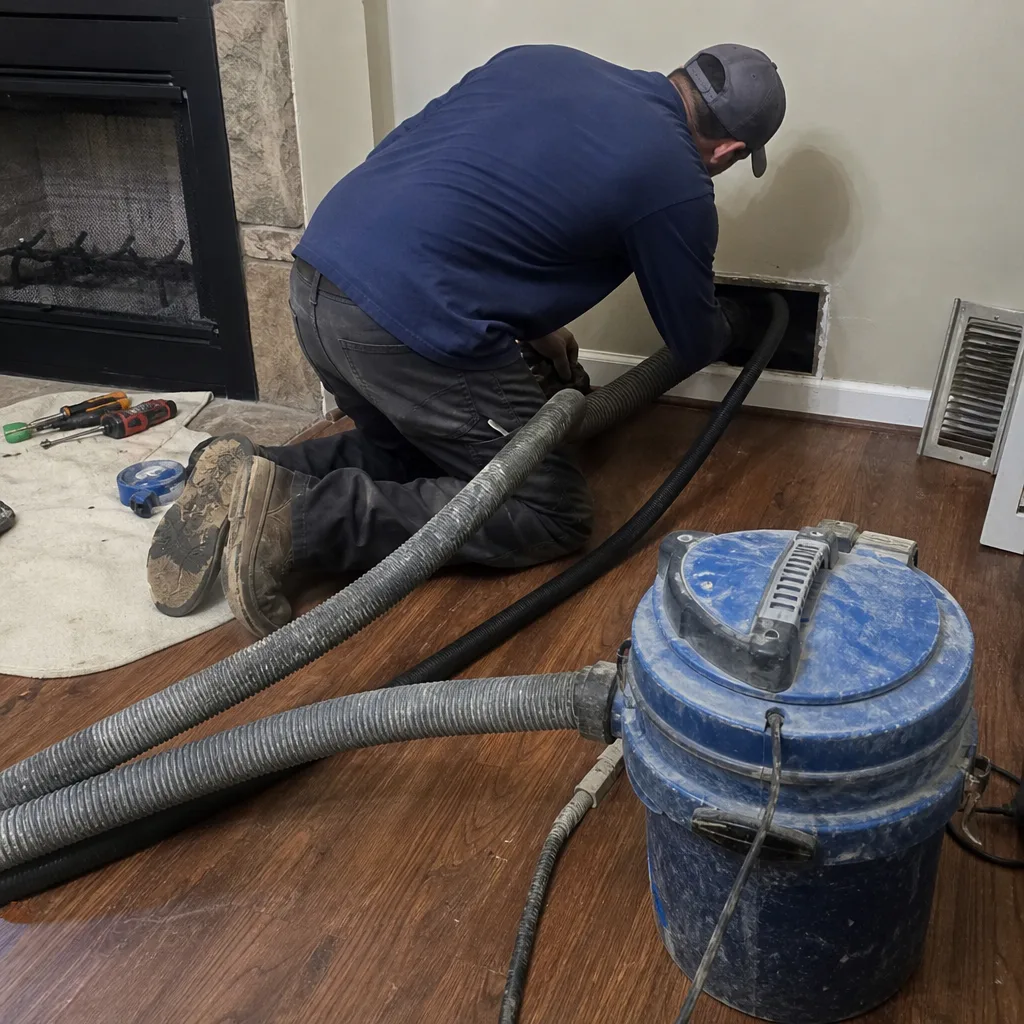
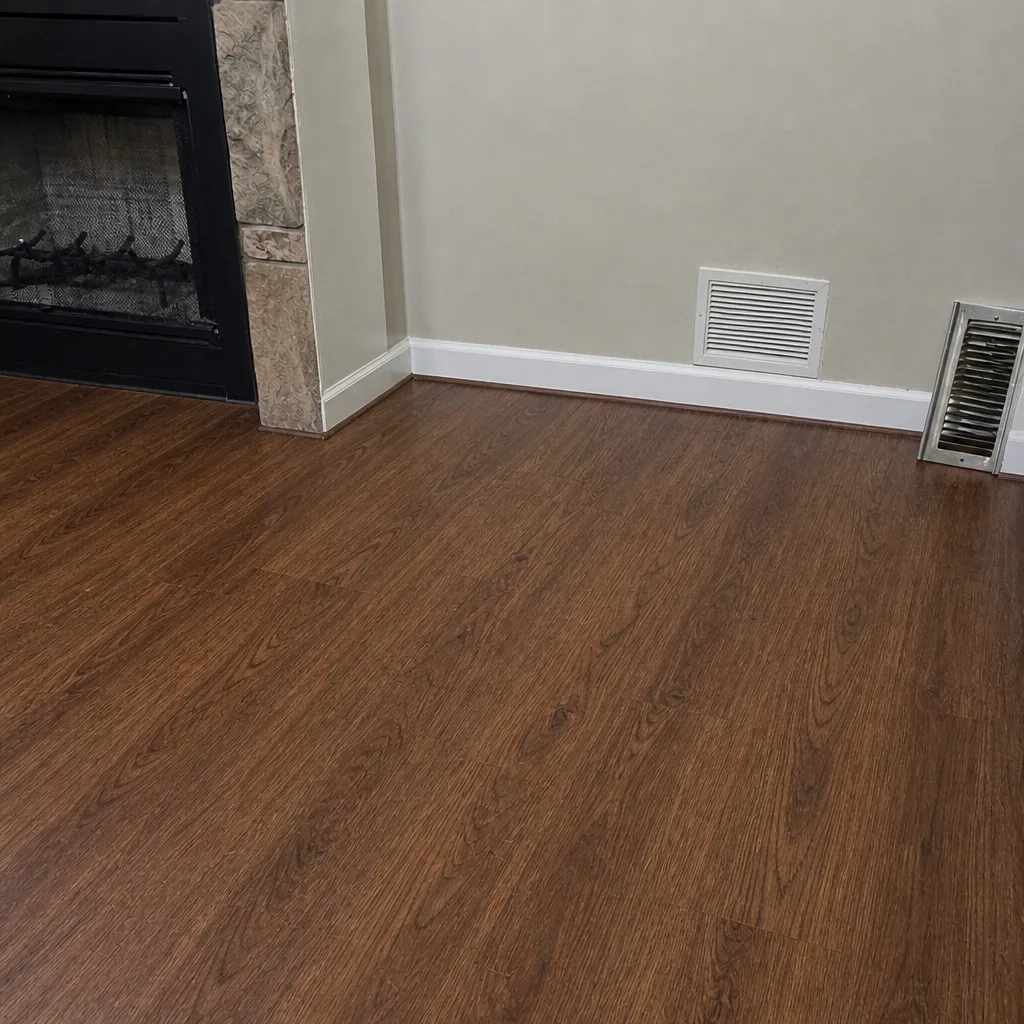
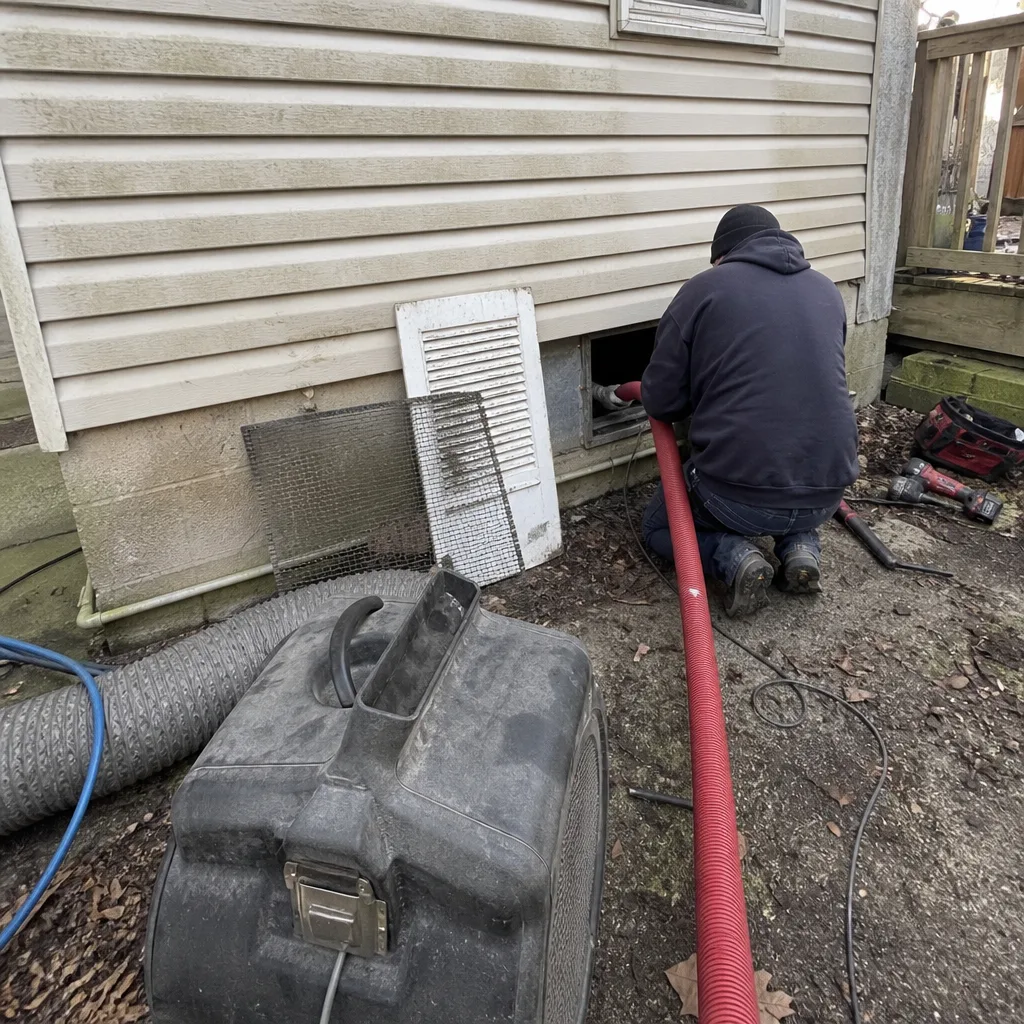
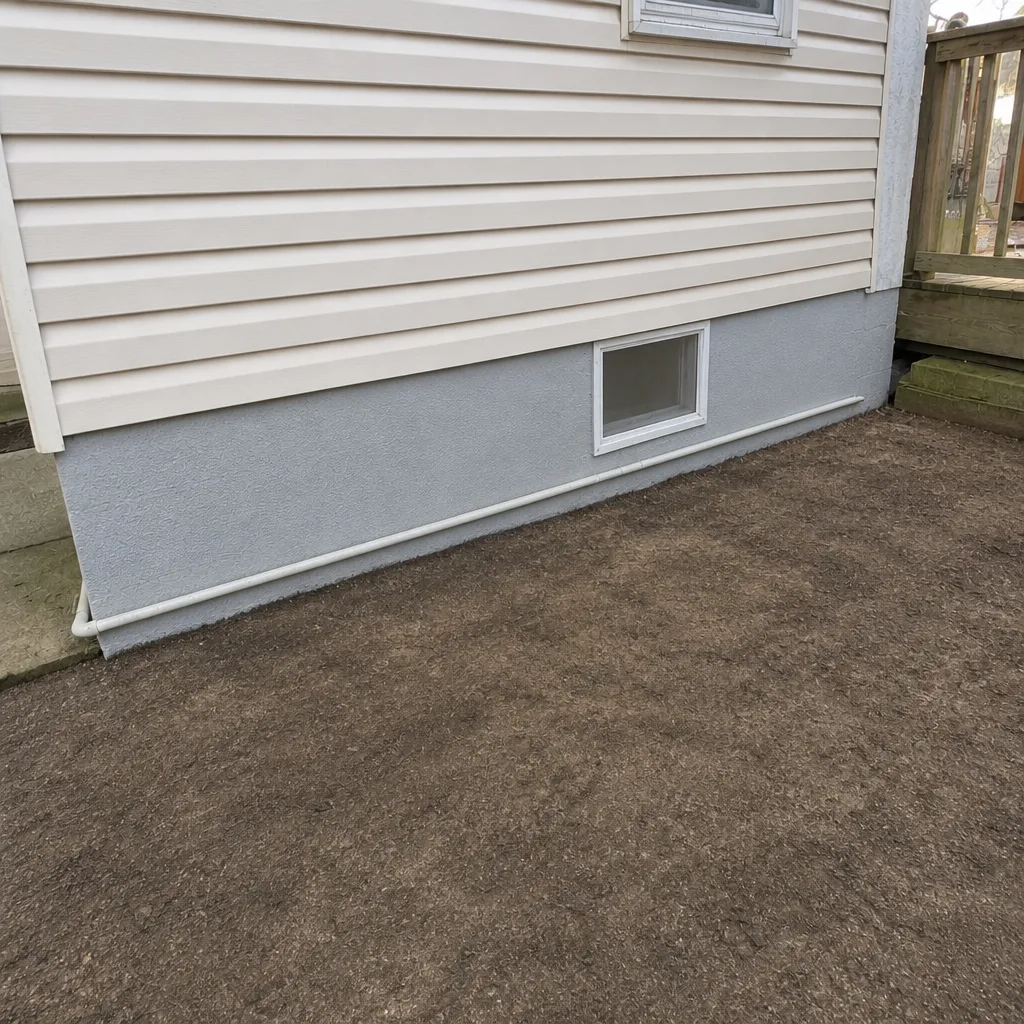
Whole-system duct and dryer vent check with before-and-after photos - you see exactly what came out of your vents
That "$99 whole-house special" is a bait ad - the real number appears once they are in your hallway, or the "clean" is a shop-vac at the register. We photograph the inside of your ducts before and after instead.
DIY vs Professional Air Duct Cleaning: The Louisville Homeowner’s Decision Guide
Here’s the part most DIY duct cleaning advice skips: the brush-and-vacuum kits on the shelf at a Louisville hardware store are built to reach about the first 12 inches of a duct run. A typical Louisville home has hundreds of linear feet of ductwork tucked behind drywall, over ceilings, and through crawlspaces – most of it never touched by the tool you just bought. The problem isn’t that DIY duct cleaning is dangerous. It’s that it’s almost entirely ineffective, and most homeowners only find that out after the money’s spent and the dust has settled back into the same runs it came from. This guide breaks down exactly what consumer equipment can and can’t reach, which DIY tasks are genuinely worth your time, and how to know when it’s time to bring in professional-grade equipment.
Quick Answer
Professional air duct cleaning removes contamination a homeowner physically cannot reach: the full length of every supply and return run, using truck-mounted negative pressure and rotary brush tools that consumer kits don’t replicate. DIY cleaning is worth doing on registers, return grilles, and filters, but it won’t clean the interior of the duct system itself. For most Louisville homes with visible dust buildup, pets, recent renovation, or allergy concerns, professional cleaning delivers results DIY simply can’t match.
Styles & brands we work with
- Whole-home duct cleaning
- Dryer vent cleaning
- Camera inspection
- Sanitizing & deodorizing
Table of Contents
- What DIY Duct Cleaning Can Actually Reach
- What Professional Equipment Can Reach That DIY Can’t
- The DIY Duct Tasks That Are Genuinely Worth Doing
- Why Partial DIY Cleaning Can Backfire: Containment and Negative Pressure
- Louisville Home Profiles Where Professional Cleaning Has the Clearest ROI
- How to Do a Legitimate DIY Pre-Inspection Before You Call Anyone
- How a Professional Duct Cleaning Job Actually Runs
- DIY vs Professional Cost: What You’re Really Paying For
What DIY Duct Cleaning Can Actually Reach
Consumer duct cleaning kits fall into two rough categories: a spinning brush on a flexible rod, and a shop-vac attachment with a longer hose. Both are marketed as whole-system solutions. Neither is. The brush reaches a few feet into a straight run before the rod binds on an elbow, and most residential duct systems are nothing but elbows, wyes, transitions, and drops. In a Louisville home with a basement or crawlspace trunk line feeding multiple floors, that geometry defeats consumer tools within the first turn.
Suction is the second limiting factor. A shop vac pulls air at a fraction of what’s needed to lift adhered dust, pet hair, and renovation debris off the interior walls of a duct. And the force it does generate escapes back into the room the moment you open a register – there’s no containment, no negative pressure, and no way to keep the loosened material from settling right back into the living space or into the next run over.
What DIY kits do handle well:
- The visible throat of a supply register, which collects dust from ordinary room air
- The inside face of return grilles, which you can remove and wash
- Surface dust on the outside of the register and surrounding drywall
- Short, straight drops where the brush can actually track
That list is worth doing on its own, and we’ll cover it below. But if your reason for looking into air duct cleaning is a persistent dust problem, musty smell, or a recent renovation, none of those four items addresses the source.
What Professional Equipment Can Reach That DIY Can’t
A professional duct cleaning setup combines two things consumer kits don’t: source-capture vacuum and mechanical agitation at full run length. The vacuum side creates continuous negative pressure across the whole system, so any material loosened anywhere in the ductwork is pulled toward the collection unit instead of drifting into the room. The agitation side uses rotary brush heads on long flexible whips that negotiate every elbow, compressed-air tools that scour the walls, and in some runs contact cleaning that reaches all the way to the duct’s terminus.
At Thrive Air Duct Cleaning, we run Rotobrush and Nikro systems, plus Abatement Technologies equipment for containment and air quality control during the job. These are the same categories of equipment used by restoration crews and HVAC contractors – not a scaled-up consumer kit. A truck-mounted or high-capacity vacuum pulls hundreds of times more air than a shop vac, and the rotary brush attachment tracks through the full run length, including the sections of duct a homeowner will never see from any access point.
What that translates to on a Louisville job:
- Full supply and return runs cleaned end to end, not just the first few feet
- Material pulled out of the system and captured, not redistributed into the room
- Access points cut where none exist, then properly sealed after the job
- A visible before-and-after record so you see what came out of your ducts
The other capability a generalist can’t match is duct repair. If a run is crushed, disconnected, or leaking at a joint, cleaning without fixing the structural issue just resets the clock. We clean it. We repair it. We clear it.
The DIY Duct Tasks That Are Genuinely Worth Doing
Not every duct-adjacent task needs a professional crew. A handful are straightforward, safe, and genuinely improve indoor air quality when done regularly. Here’s the short list we’d give any Louisville homeowner who wants to stay involved in their own system’s health.
1. Clean the registers and grilles
Pop each register cover off, wash it in warm soapy water, dry it fully, and reinstall. Do this on both supply and return grilles. Kitchen, bathroom, and laundry registers collect the most – expect a film you can feel by touch. Let them dry completely before reinstalling so you don’t introduce moisture into the throat of the duct.
2. Vacuum the accessible return grille and the duct throat behind it
With the register off, use a shop vac with a brush attachment on the visible interior of the return duct – typically the first few inches. This is safe and useful. Stop at the point where ductwork turns or disappears behind structure.
3. Change the HVAC filter on schedule
A clogged filter is the single most common cause of “dirty duct” symptoms. A restrictive filter makes the system pull harder, which increases the amount of air that bypasses the filter and deposits dust into the ductwork downstream. Check it monthly through heavy-use seasons and change according to the manufacturer’s spec for your filter type.
4. Keep the air handler closet or closet grille clear
Allergens and dust collect near the air handler from ordinary household activity. A quick vacuum of the floor and surrounding surfaces reduces what can get pulled into the return.
5. Wipe down registers between deep cleans
There’s no harm in a periodic pass with a damp cloth, and it makes a bigger visual difference than most homeowners expect.
Those five tasks are the entire legitimate DIY scope. Everything beyond them requires equipment you can’t buy in a retail store, and much of it requires controlled containment to be safe.
Why Partial DIY Cleaning Can Backfire: Containment and Negative Pressure
Here’s the thing about ductwork: it’s a distribution system. If you disturb settled dust inside a duct without holding the system under negative pressure, that dust has to go somewhere. The path of least resistance is out of the nearest register, which is often the room you were trying to clean. This is why homeowners sometimes report that a DIY duct cleaning made dust problems worse for a few days before settling back to baseline.
Proper containment means:
- A vacuum source connected to the system that creates continuous negative pressure across it
- Every register and grille either covered or connected to the collection unit
- Agitation tools that lift material into that airflow, not out of it
- Filtration on the exhaust so the vacuum doesn’t return fine particles to your home
Consumer equipment doesn’t do any of that. It agitates without capturing, and it captures without containing. The result isn’t a cleaner system – it’s a system that’s had its settled dust loosened and redistributed into new places, including your furniture, ceiling fans, and bedding.
This is why we approach the job as a whole-system process rather than a “vacuum the visible parts” service. Containment and air quality control during the job are just as important as the cleaning tools themselves. If your ducts are genuinely dirty, the fix isn’t to dig at them with a retail kit. It’s either leave them alone until you can have them cleaned properly, or book the cleaning and keep the DIY scope to registers and filters in the meantime.
Louisville Home Profiles Where Professional Cleaning Has the Clearest ROI
Not every Louisville home needs professional duct cleaning. A newer, well-sealed home with clean history and no pets may go years without needing more than filter changes. But a few home profiles come up again and again, and for those the return on professional cleaning is clearest.
Homes going through or recently out of renovation
Drywall dust, sawdust, insulation fibers, and construction debris end up in ducts whenever a Louisville home is remodeled, added onto, or has its HVAC touched. That material doesn’t blow out on its own. It settles into the horizontal runs and stays there. Post-renovation cleaning is one of the highest-value jobs we handle.
Households with pets
Pet hair acts a little like a filter media inside duct walls – it catches fine dust and dander, then holds it. Once hair builds up inside a run, ordinary filter changes can’t reach it. Homes with two or more dogs or cats are strong candidates for periodic professional cleaning.
Homes with asthma or allergy sufferers
If someone in the household is managing asthma or seasonal or year-round allergies, reducing the particle load in the air system is one of the few home maintenance tasks that directly affects the air they breathe. Combined with a quality filter from a brand like Honeywell or Aprilaire, professional cleaning is a reasonable first step.
Older Louisville homes with a duct-repair history
Some of the housing stock in neighborhoods across Louisville was built with ductwork that’s since been added to, patched, extended, or partially disconnected during earlier HVAC work. In those homes, cleaning without an inspection often turns up the real problem: a disconnected run or crushed section of flex duct. That’s where our duct-repair capability matters as much as the cleaning itself.
Homes moving to a new owner
You don’t know what the last owner’s habits were. A pre-move-in cleaning on a home that’s clearly had pets or recent work is a simple way to start with a known baseline.
How to Do a Legitimate DIY Pre-Inspection Before You Call Anyone
A pre-inspection isn’t a substitute for professional cleaning. It’s a way to walk into a professional estimate as an informed client rather than a curious one. It lets you point to specific concerns, ask better questions, and recognize a thorough estimate when you get one. Here’s a numbered walk-through you can do in about twenty minutes with a flashlight and a phone camera.
- Photograph every register in the house. Supply and return, every room. Use one continuous camera roll so you can share it with the estimator.
- Pull one register cover and photograph the visible duct throat. Look for dust film, pet hair, debris, or anything loose. Photograph before you vacuum anything.
- Check the air handler compartment. Photograph the area around the filter slot and the intake plenum. If the filter slot has visible gaps around the filter edge, note that – unfiltered bypass is a real source of duct contamination.
- Note the filter type and the last change date. A 1-inch fiberglass filter and a 4-inch pleated filter call for different cleaning schedules.
- Look for disconnected ductwork in the basement, crawlspace, or attic. Any flex duct that’s come off a boot or a trunk is a structural problem to fix, not a cleaning problem to solve.
- Listen for whistle or rattle at a register. That often means a duct joint has separated or a run is undersized.
- Record your own observations in writing. “Dust film on the master bedroom supply register, pet hair in the living room return, musty smell when the AC starts” – that’s a useful report for whoever comes to estimate.
An honest estimator will listen to that list and either confirm the findings or explain what they see differently. If a company can’t talk you through what they’ll do about the specific things you photographed, that’s a signal worth noticing.
How a Professional Duct Cleaning Job Actually Runs
Understanding the process makes it easier to see the gap between a retail kit and a proper cleaning. Here’s the general shape of a residential job, in order.
- Walk-through and access planning. The crew identifies every supply and return, plus the air handler, and decides where access points need to be cut.
- Registers removed and covered. Every register and grille comes off so the vacuum and agitation tools can work the length of the run.
- Negative pressure established. The vacuum source is connected to the system so the entire ductwork is held under continuous negative pressure for the duration of cleaning.
- Mechanical agitation, run by run. Rotary brush tools and compressed-air tools track every supply and return line end to end, loosening material into the airflow toward the collection unit.
- Air handler and coil compartment cleaned. The parts of the system closest to the source get attention too – that’s where contamination builds first.
- Access points sealed. Any cut access point is sealed with proper materials, not tape and hope.
- Before-and-after photos. You see what came out of your ducts, room by room, before the crew leaves.
The whole job is typically two to four hours for a standard Louisville home, though that varies with system size and condition. The point isn’t the schedule – it’s that every step above has a purpose that a shop vac and a retail brush kit can’t fill.
If you also have a dryer that’s taking longer to dry a load than it used to, ask about dryer vent cleaning during the same visit. Lint buildup in a dryer vent is a fire risk, and it’s the kind of thing that’s easy to postpone until the dryer stops heating adequately. One call can resolve both.
DIY vs Professional Cost: What You’re Really Paying For
The cheapest answer to “DIY vs professional” is the wrong one if it hides the real trade. A retail duct cleaning kit is a one-time purchase that will not clean your ducts. A professional job has a real cost, and in exchange you get the full system cleaned, contained, photographed, and – when needed – repaired. Here’s the honest breakdown of what you’re actually buying in each case.
| Factor | DIY consumer kit | Professional cleaning |
|---|---|---|
| Reach | Roughly the first foot of each run | Every supply and return, end to end |
| Suction | Shop-vac level, no containment | High-capacity negative pressure, contained |
| Agitation | Short flexible brush or hose | Rotary brush and air tools on full-length whips |
| Containment | None | System held under negative pressure throughout |
| Duct repair capability | None | Full repair of disconnected or damaged runs |
| Verification | What you can see by eye | Before-and-after photos of your own ducts |
| Repeat cost | One purchase, still doesn’t clean the system | Scheduled per system, priced by estimate |
Pricing for Louisville air duct cleaning is set per system, by written estimate, based on the number of runs, system size, and whether repair is involved. The estimate is free, and everything is agreed before any work starts. If someone quotes you a number before looking at the system, or quotes a per-vent figure without knowing the run count, treat that as a warning sign, not a bargain.
Common Mistakes to Avoid
- Buying a retail duct kit expecting whole-system results. It reaches the first foot or so of a run and stops. The remaining linear footage is untouched, and you’ve spent money on the wrong problem.
- Skipping the filter change and blaming the ducts. In Louisville homes, a clogged or wrong-spec filter is often the actual reason for the dust problem. Fix the filter first, then evaluate the ducts honestly.
- Cleaning ducts without containment and disturbing what’s inside. A shop vac does this in the wrong direction – it loosens settled material and pushes it into the room. If you can’t contain the system, leave the interior of the ducts alone.
- Treating a disconnected duct as a cleaning issue. In Louisville basements and crawlspaces, flex duct that’s come off a boot sends conditioned air into the structure, not the room. That’s a repair call, not a cleaning call.
- Hiring on a coupon price without asking what’s included. The most common bait-and-switch in this industry is a low headline number that becomes a much larger invoice once the crew is on-site. Ask for a per-system price, in writing, before work starts.
- Never asking to see the ducts after. If a company won’t show you before-and-after photos of the runs they just cleaned, you have no way to know what was actually done. You deserve to see the difference before they leave.
- Ignoring the dryer vent because the ducts seem clean. Two separate systems, two separate risks. Lint clogs a dryer vent slowly and quietly, and it’s a fire issue that duct cleaning doesn’t touch.
See the difference
 Before
 After
 Before
 After
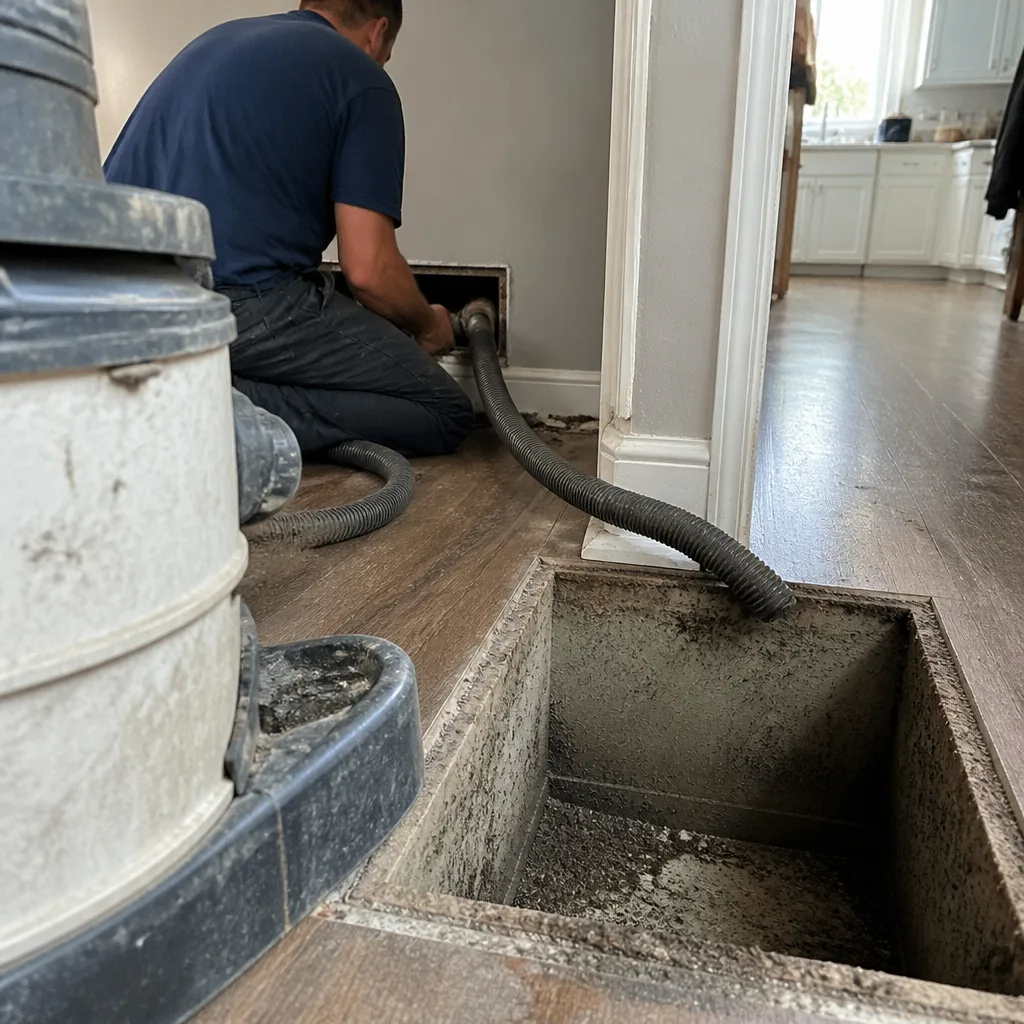 Before
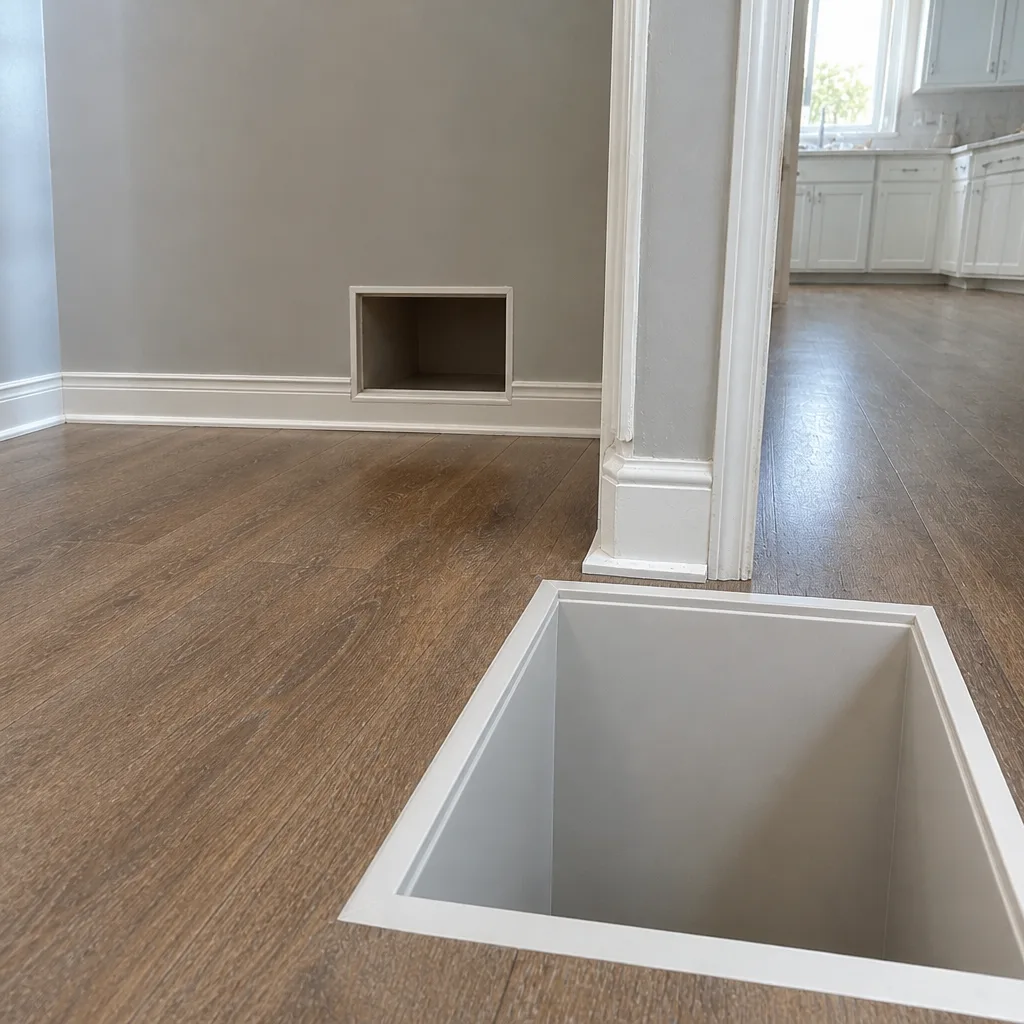 After
When to Call a Professional
Call a professional when the problem you’re solving lives inside the ductwork itself, not at the register. That means visible dust blowing out of supplies when the system starts, a musty smell that gets stronger whenever the AC or heat kicks on, a recent renovation, a suspected disconnected or crushed run, or a household member whose allergies or asthma is worse indoors than out. It also means winter and summer when the system is running hard and any contamination inside it is being distributed through every room several times a day. A pre-inspection like the walkthrough above will tell you whether those symptoms are really there.
Thrive Air Duct Cleaning offers free estimates in Louisville. We clean it. We repair it. We clear it. Call Thrive Air Duct Cleaning at (866) 875-5603. We answer 24/7. Fast dispatch from 7am to 7pm, Sunday through Friday.
Frequently Asked Questions
Partly – DIY is worth it for registers, return grilles, filter changes, and wiping down surfaces around the air handler. It is not worth it for cleaning the interior of the ductwork, because consumer kits can’t reach past the first foot or so of each run. If your goal is cleaner registers, DIY handles it. If your goal is a cleaner duct system, professional equipment is the only way to get there.
It’s possible. Flexible duct lining can tear on retail brush rods, insulation inside the duct can be disturbed, and the spiral metal in flex duct can be crushed at a tight turn. The dampers inside a duct can also be knocked out of alignment with enough force. Leave the interior of the ducts alone if you don’t have the right equipment – the risk isn’t just ineffective cleaning, it’s actual damage.
For most homes, professional cleaning every few years is a reasonable baseline, and more often if you have pets, someone with significant allergies, or have just finished a renovation. Homes with a clean history, no pets, and good filtration can go longer. The honest answer is that there’s no single schedule – it depends on how much contamination the system is actually accumulating.
Low headline prices usually come from quoting per vent without inspecting the system, skipping containment, running one small vacuum rather than proper negative pressure, or leaving out duct repair entirely. By the time the crew is on-site, extra charges appear for the runs that were always going to cost more. Ask for a single flat price per system, agreed before work starts, and a written estimate that lists what’s included.
Ask for before-and-after photos of your own ducts, not stock images or a generic brochure. A professional job should give you a visible record of what came out of each run, room by room. If a company can’t or won’t show you, that tells you something about the job.
Both. Duct repair is part of what we do – disconnected flex runs, crushed sections, and separated joints get repaired during the visit, not deferred to a second company. Cleaning without addressing structural damage just resets the clock, so we approach the system as a whole. Call (866) 875-5603 for an estimate and we’ll confirm what your specific system needs.
The Bottom Line
DIY duct cleaning in Louisville isn’t dangerous – but for most homeowners, it’s simply not the tool for the job. The registers, grilles, and filters are worth handling yourself, and doing so keeps the visible parts of the system clean and the filter working as designed. Everything past the first foot of a run is a different problem, and it needs a different process: full-length agitation, high-capacity negative pressure, proper containment, and the ability to repair what’s broken along the way. Once you know that difference, the spending decision gets much clearer. Clean what you can reach, keep the filter changed, run the pre-inspection walkthrough, and call a professional when the problem lives inside the ductwork rather than at the register. Your air system works harder than you think – and it’s worth maintaining properly.
If you’re ready to see what’s actually in your ducts, Thrive Air Duct Cleaning uses professional-grade equipment from Rotobrush, Nikro, and Abatement Technologies on Louisville homes. Free estimates, one flat price per system agreed before work starts, before-and-after photos of your own ducts, and duct repair handled by the same team that cleans. Call (866) 875-5603 for a free estimate. We answer 24/7. Fast dispatch from 7am to 7pm, Sunday through Friday.
Written by the team at Thrive Air Duct Cleaning.