
Last updated November 14, 2026
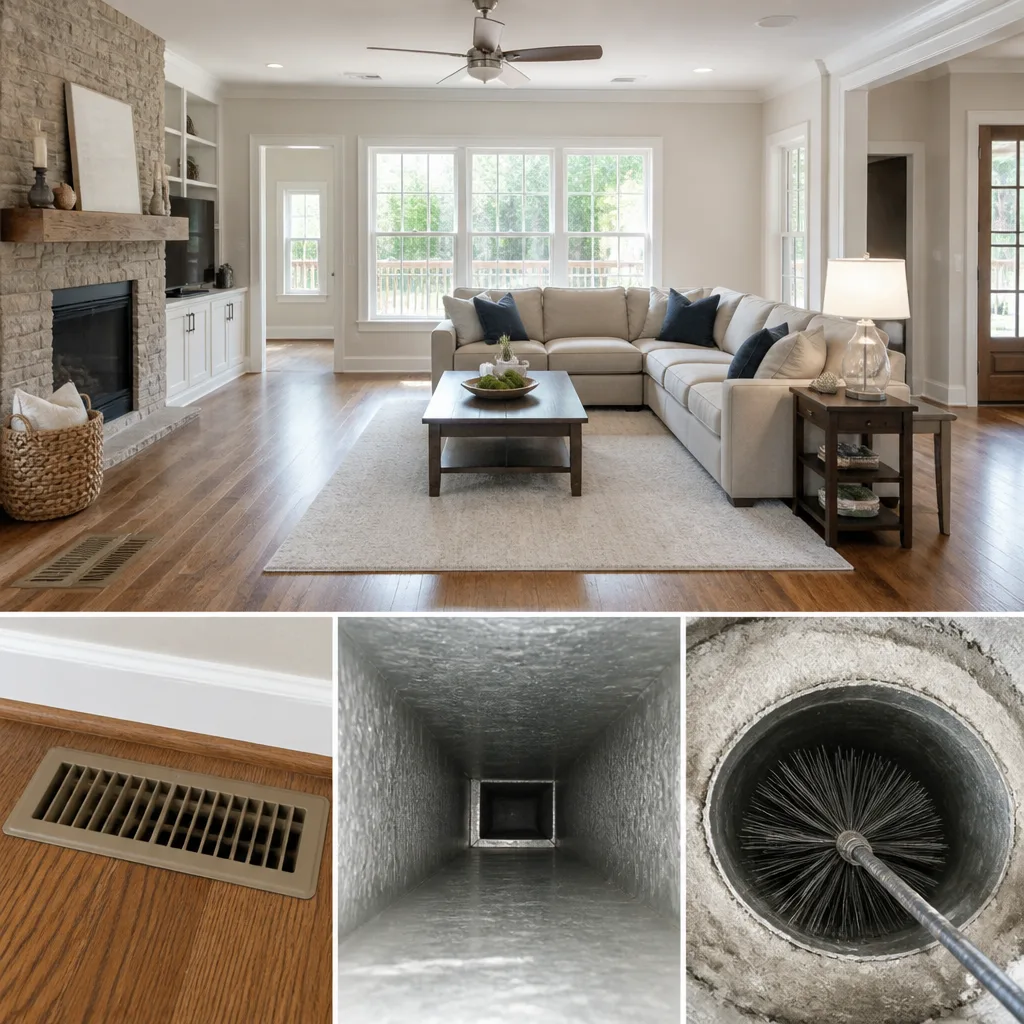 Whole-home duct cleaning
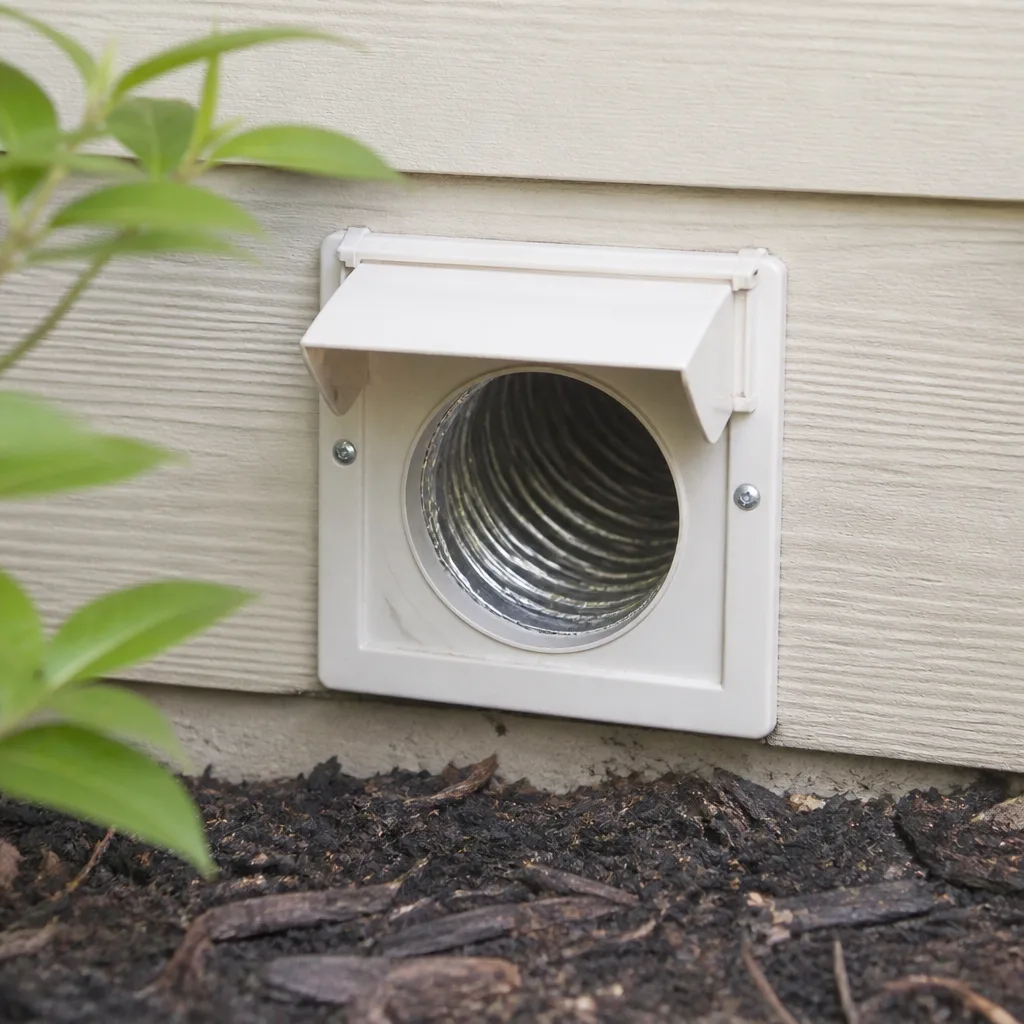 Dryer vent cleaning
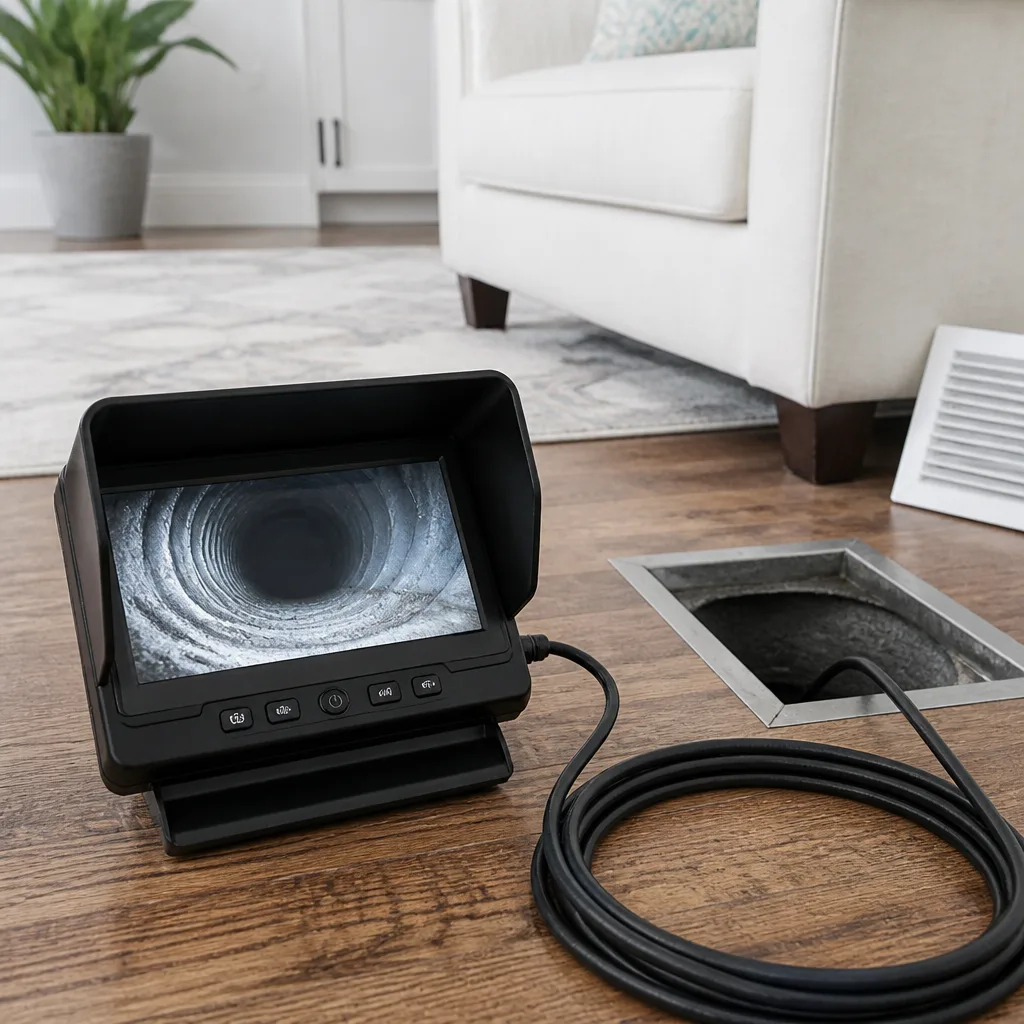 Camera inspection
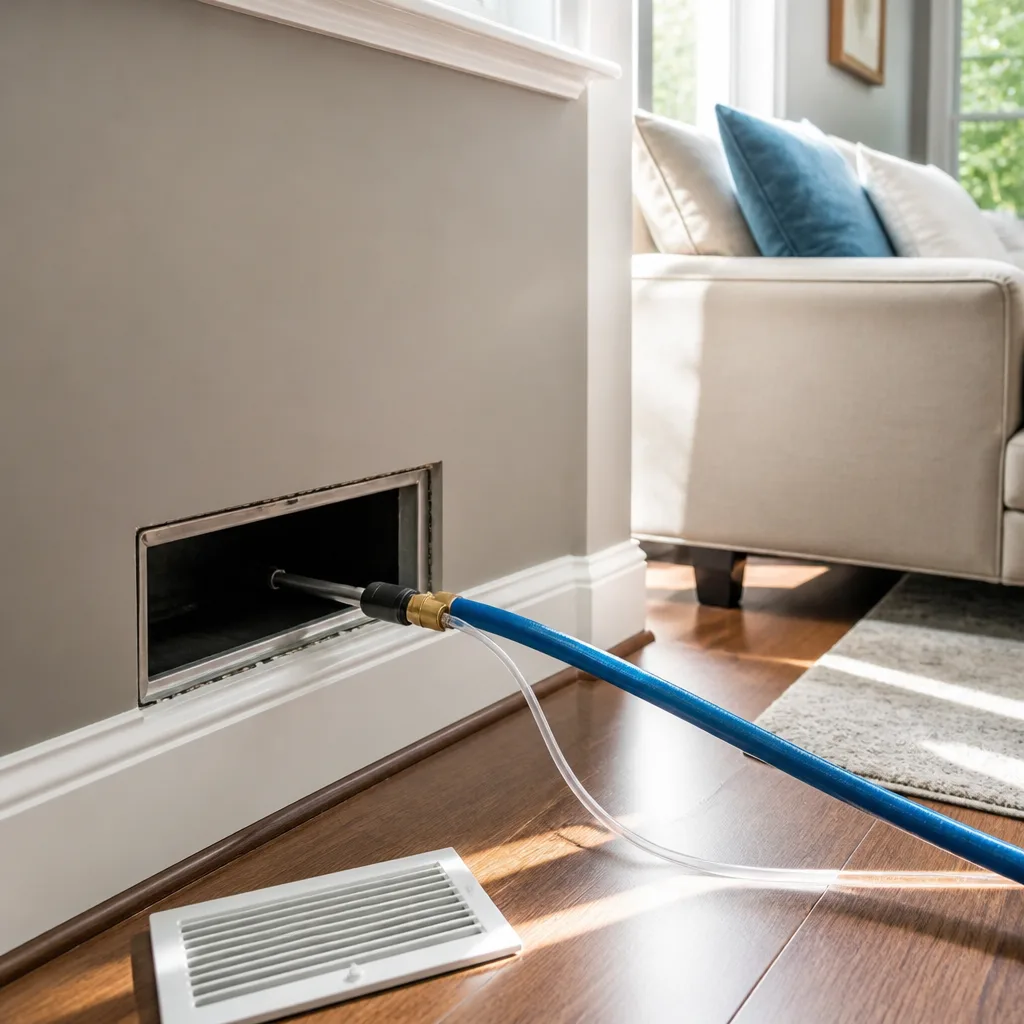 Sanitizing & deodorizing
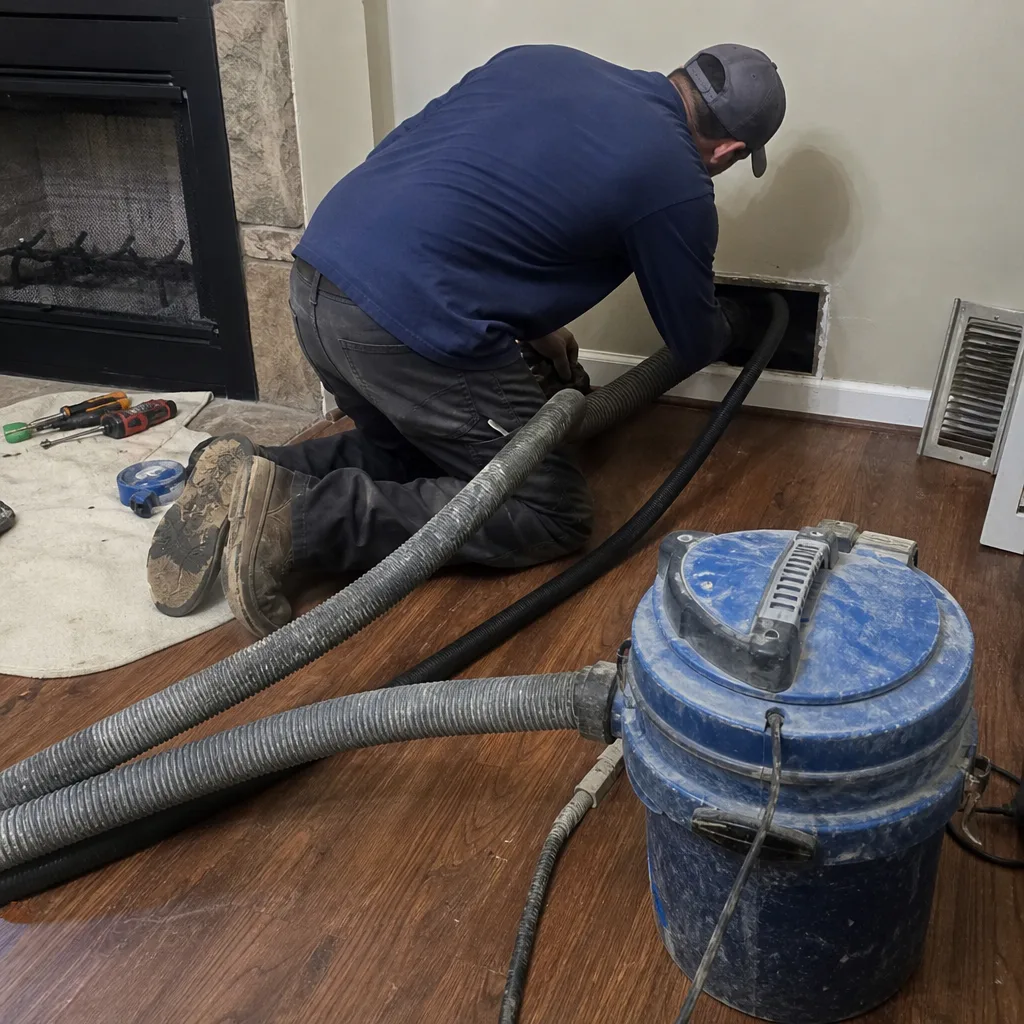
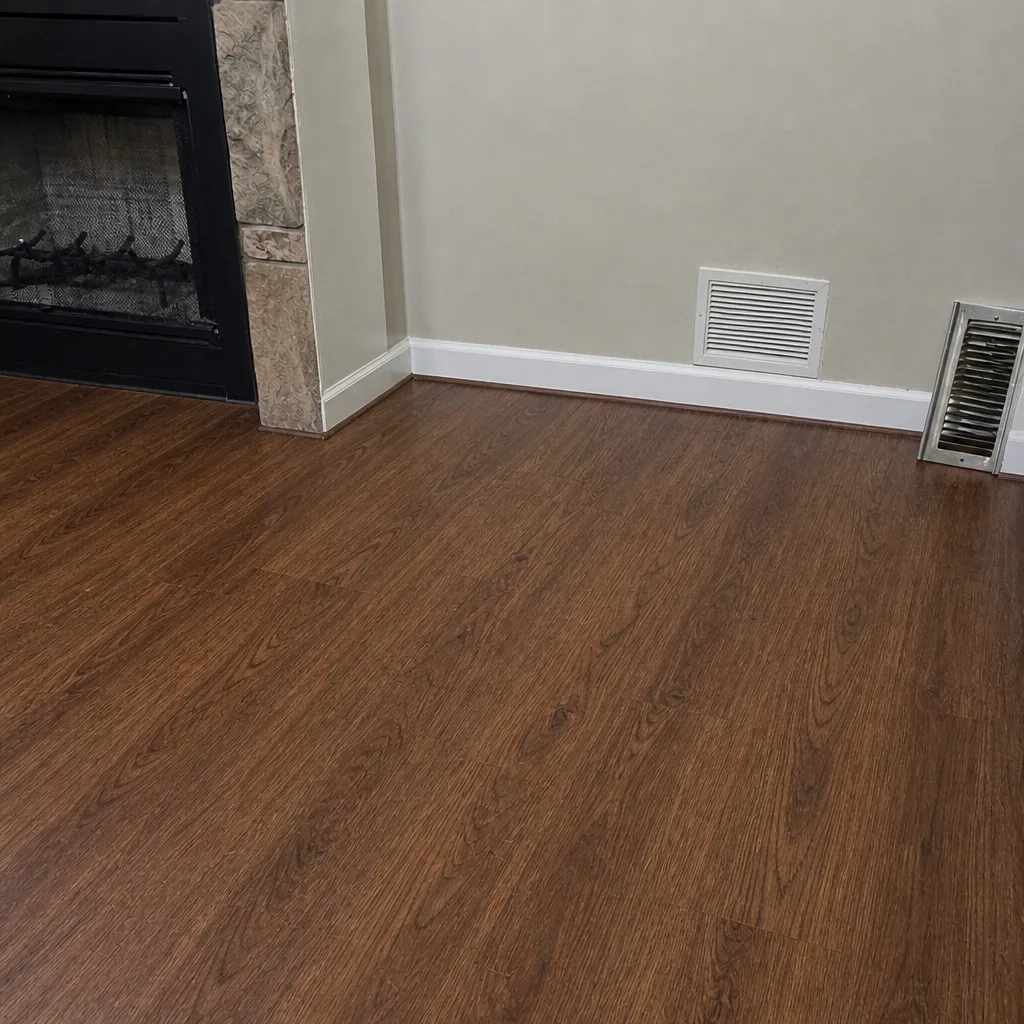
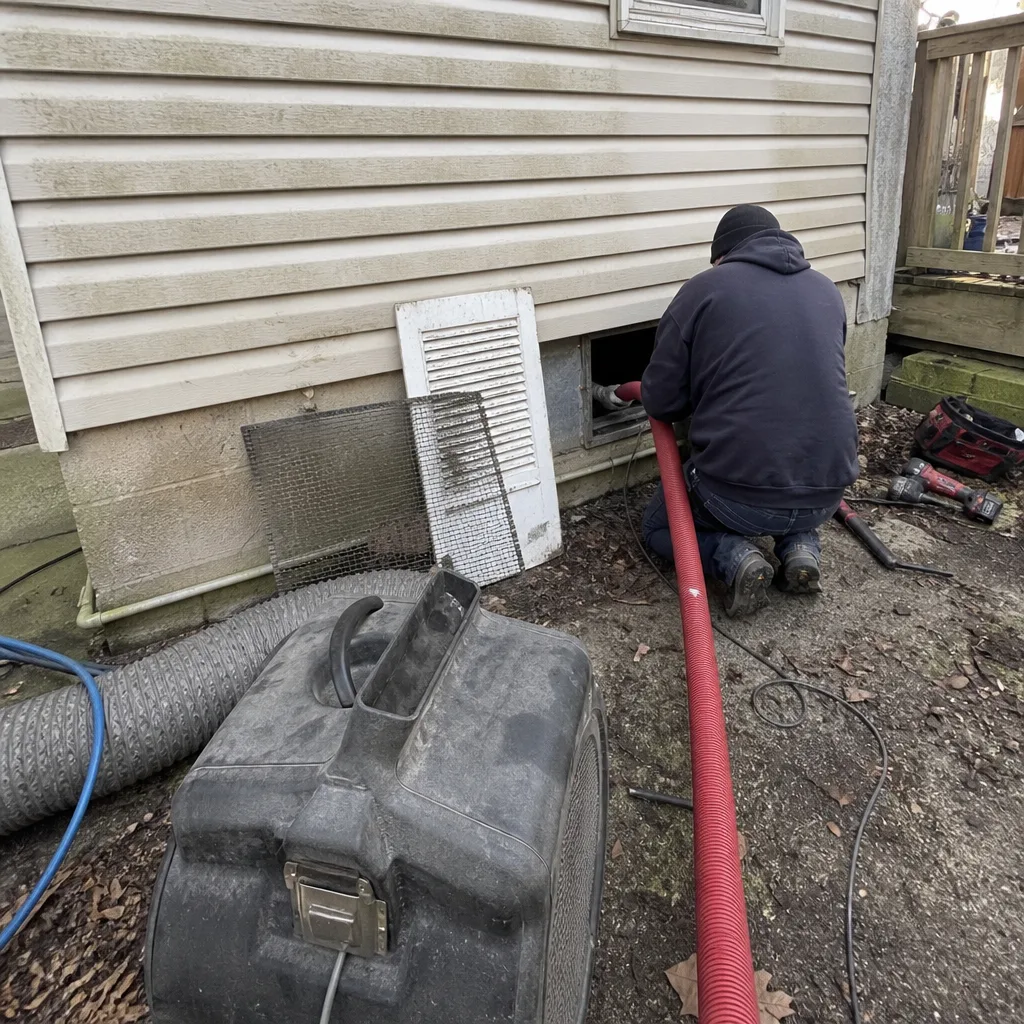
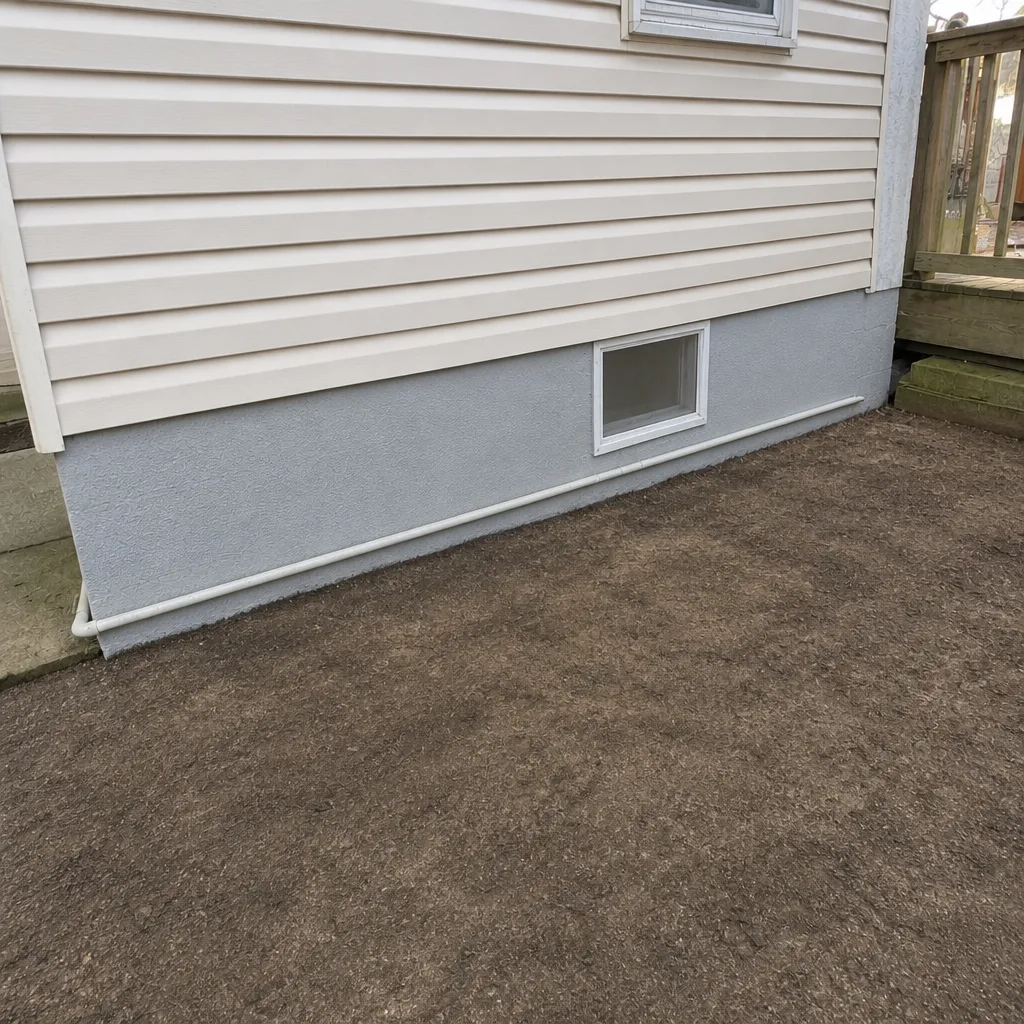
Whole-system duct and dryer vent check with before-and-after photos - you see exactly what came out of your vents
That "$99 whole-house special" is a bait ad - the real number appears once they are in your hallway, or the "clean" is a shop-vac at the register. We photograph the inside of your ducts before and after instead.
Air Duct Cleaning Permits, Codes & Inspections in Louisville, KY: What You Need to Know
Here’s a detail that surprises a lot of Louisville homeowners: the cleaning itself almost never needs a permit. The repair often does. When a technician pulls a return drop and finds a crushed trunk line, disconnected flex run, or a section that’s been taped and re-taped since the Reagan administration, the fix may cross the line from maintenance into mechanical work that Louisville Metro expects to see permitted and inspected. That distinction matters most at the worst possible time: when you’re selling, refinancing, or getting a certificate of occupancy. This guide explains what Louisville Metro Code Enforcement and the Kentucky Mechanical Code actually govern, which duct operations need a permit, how older Louisville housing stock changes the picture, who’s licensed to do what, and what paperwork to keep so a closed sale doesn’t turn into a renegotiation.
Quick Answer
Air duct cleaning in Louisville generally does not require a permit because it’s considered maintenance, not construction. Duct repair or modification that involves cutting, replacing, rerouting, or adding ductwork usually does fall under the Kentucky Mechanical Code and may require a permit and inspection through Louisville Metro. Always confirm the requirement with Louisville Metro’s code office before work starts, and ask any contractor to document exactly what was done.
Styles & brands we work with
- Whole-home duct cleaning
- Dryer vent cleaning
- Camera inspection
- Sanitizing & deodorizing
Table of Contents
- Cleaning vs. Repair: Where the Permit Line Actually Sits
- What Louisville Metro and the Kentucky Mechanical Code Govern
- Louisville’s Older Housing Stock and Extra Compliance Steps
- Cleaning Contractor vs. Licensed HVAC Contractor in Kentucky
- How a Louisville Duct Inspection Usually Works
- What to Keep for Resale and Refinancing
- Questions to Ask Before You Sign
- What Duct Work Typically Costs in Louisville
Cleaning vs. Repair: Where the Permit Line Actually Sits
The permit question hinges on one word: modification. Cleaning removes debris. Modification changes the system. Those are treated very differently by Louisville Metro.
Our technicians have up to 10 years of experience, and the single most common source of confusion we run into is homeowners who assume a repair is automatically covered under the cleaning job. Sometimes it is. Often it isn’t.
Here’s the practical split:
- Typically no permit: Source removal cleaning, vacuuming registers and returns, brushing the interior of existing duct runs, sanitizing, sealing minor joints with approved tape or mastic, replacing a register grille or return-air grille.
- Often needs a permit: Replacing a section of rigid duct, rerouting a run, adding a new supply or return branch, resizing a trunk line, converting flex to rigid, or anything that changes the system’s air distribution.
- Almost always needs a permit and inspection: Work that touches the air handler connection in a way that changes system configuration, or modifications triggered by a failed inspection or a real estate transaction correction notice.
A simple rule: if the work involves a cut, a new joint in the field, or a change in where air goes, call Louisville Metro first and confirm. If it’s cleaning and resealing of what’s already there, you’re almost certainly in maintenance territory.
We handle cleaning and duct repair as separate scopes for exactly this reason. When we find damage mid-cleaning, we stop and explain it rather than patching on the spot without documentation. See our air duct cleaning page for what a standard cleaning involves.
What Louisville Metro and the Kentucky Mechanical Code Govern
Two layers of authority matter to Louisville homeowners: the Kentucky Mechanical Code, which is the state-adopted building code covering HVAC and ductwork, and Louisville Metro Code Enforcement, which issues permits and performs inspections in Jefferson County.
The Kentucky Mechanical Code addresses duct systems as part of the mechanical permit scope. It covers:
- Materials and installation standards for duct systems, including sealing and support requirements.
- Duct sizing and airflow requirements based on load calculation.
- Clearances and combustion air requirements where ducts pass near or serve gas appliances.
- Requirements for duct penetrations through fire-rated assemblies, which matters more than people realize in multi-family and older commercial buildings.
Louisville Metro Code Enforcement applies those requirements through its permitting process. For a typical one- or two-family home, a mechanical permit is pulled by the licensed mechanical contractor doing the work, and an inspection happens before the system is closed up or signed off.
What the code does not govern is cleaning. There is no Louisville Metro permit for duct cleaning itself, no inspection of cleaning quality, and no code standard for how clean is clean. That’s a professional-standards question, not a code question, which is why choosing the right contractor matters more here than the permit.
One caveat: because the code is state-adopted, amendments and local interpretations do occur. The specific requirement can also hinge on the scope of the job. Confirm with Louisville Metro’s code office before committing to any repair, and get the answer in writing if you can.
Louisville’s Older Housing Stock and Extra Compliance Steps
Louisville’s housing stock is one of the reasons duct work here isn’t always a straight clearing job. Many homes in neighborhoods like the Highlands, Germantown, Schnitzelburg, Clifton, and Old Louisville were built well before modern ducting standards, and some predate central air entirely. Systems were retrofitted, sometimes more than once.
That history creates specific compliance issues:
Pre-1970s flex duct. Early flexible duct products were not always tested to modern standards, and older flex can be degraded, torn, or improperly supported. When a cleaning reveals flex duct that needs replacement, that’s a modification, not a maintenance task, and it’s a good moment to check permit requirements.
Asbestos-wrapped duct and pipe insulation. Older Louisville homes sometimes contain asbestos-containing materials on ductwork, pipe insulation, or boiler components. Cleaning a system can disturb those materials, which is a serious health concern and a code compliance issue in its own right. If a contractor finds suspect material, the correct response is to stop, avoid disturbing it, and have it evaluated by a qualified asbestos professional. This is not work any duct cleaning company should handle in passing, and we don’t.
Irregular duct runs and retrofits. A system added to a 1920s home decades after construction frequently has undersized runs, sharp turns, or flex jammed through cavities at a tight radius. A cleaning may expose these, and their correction is mechanical work.
Basement and crawlspace ducts. Many Louisville homes have ducts routed through unconditioned basement or crawlspace space. Those runs are often the first to develop condensation problems and insulation failure, and repairing them typically qualifies as modification work.
None of this means the cleaning shouldn’t happen. It means the conversation needs to include “what if we find something.” A good contractor surfaces the finding, explains the scope, and lets you decide with a written estimate rather than improvising mid-job.
Cleaning Contractor vs. Licensed HVAC Contractor in Kentucky
Kentucky does not have a single statewide license that covers duct cleaning. Duct cleaning is an unlicensed trade in Kentucky. Mechanical contracting is not.
That distinction matters for what each type of contractor can legally do:
- A duct cleaning company can perform cleaning, sanitizing, and in many cases basic reconnection and resealing of existing duct components. It typically cannot pull a mechanical permit in its own name because permitting requires the appropriate contractor license.
- A licensed mechanical (HVAC) contractor can pull permits for duct modification, installation, and replacement work and stand behind it through inspection.
In practice, if a repair crosses the permit line, you may need a licensed HVAC contractor involved, and we’ll tell you that directly rather than quietly doing permitted work without a permit. Doing the latter creates a paper trail problem for you, not us.
Some duct repair work does not require a license or a permit. Re-taping a joint, reconnecting a flex run that pulled loose, sealing obvious leaks with mastic, replacing a grille, and correcting support are typically maintenance-level tasks. But “maintenance” has limits, and a contractor who won’t tell you where they are is a risk.
We specialize exclusively in air duct cleaning, dryer vent cleaning, and duct repair. We don’t install HVAC equipment, we don’t do mold remediation, and we don’t do general contracting. That focus means our team knows duct systems and knows when a job needs to go to a licensed mechanical contractor with a permit.
How a Louisville Duct Inspection Usually Works
If your work requires a mechanical permit through Louisville Metro, the inspection follows a fairly predictable sequence. Here’s what to expect, so nothing catches you off guard:
- Permit is pulled by the licensed contractor before work starts, listing the scope: what’s being replaced, where, and why.
- Work is performed to the code-adopted standards, with the duct system left accessible for inspection where the scope requires it.
- Rough-in inspection happens, typically before ducts are closed up, insulated, or covered by finishes.
- Corrections are addressed if the inspector finds issues with support, sealing, sizing, or clearances.
- Final inspection and sign-off closes the permit once the system meets requirements.
- Documentation is delivered to the homeowner, including the permit number, scope, and inspection record.
Separately, cleaning-related inspections happen in a different context. When a home is being sold and a buyer’s inspector flags dirty or damaged ductwork, that finding isn’t a code violation. It’s a negotiation point. The cleaning company fixes the cleanliness, the licensed contractor handles the modification, and the permit handles the record.
Dryer vent work is largely in the same category as duct cleaning: no permit for a routine cleaning, though a full vent replacement that changes the termination point may raise questions from your local code office. See our dryer vent cleaning page for what a typical visit covers.
What to Keep for Resale and Refinancing
Here’s where documentation earns its keep. If you did any duct work in Louisville and later sell the home, the buyer’s lender or inspector may ask for proof the work was done properly and, if required, permitted.
Keep the following in a home file:
- Copies of permits and inspection records for any duct modification or replacement work.
- Written estimates and invoices showing the scope of what was performed, itemized.
- Before-and-after photos of the duct interior. Good contractors provide these. We do, and it’s the clearest record of what was actually done.
- The contractor’s name, contact info, and license information (for licensed mechanical scope work).
- Material specifications for any duct replaced, including the flex or rigid product used.
- Dates of service, so a buyer can compare against your maintenance record.
Ideally, this file isn’t a folder you scramble to assemble at closing. Keep it current. If you’re working with a real estate agent on a Louisville property, note that the transaction timeline often doesn’t allow for a permit process to run. A repair discovered three weeks before closing is a very different decision than one discovered a year in advance.
If you’re moving to the area or managing properties across the metro, our Louisville page covers the service area in more detail.
Questions to Ask Before You Sign
Whether you’re hiring us or anyone else in Louisville, the right questions separate a professional operation from a coupon crew. Every one of these has a clean answer if the contractor knows what they’re doing.
- “Does this job need a permit?” If they say “never,” ask what they base that on. If they say “always,” ask what specific scope triggers it. The correct answer is “it depends on the work,” followed by a specific explanation.
- “What equipment are you using?” Professional-grade equipment matters. We use Rotobrush and Nikro systems, plus Abatement Technologies containment equipment, and we’re happy to explain why that matters for a given job.
- “Will I get before-and-after photos?” This is your proof the work happened. Anyone who can’t produce them didn’t document the job.
- “What happens if you find damage?” You want a written estimate for the repair, not an improvised upsell on the day.
- “Are you licensed and insured?” Ask for it in writing if you’ll be using the contractor for repair work in addition to cleaning. Don’t accept a verbal claim.
- “Who pulls the permit if one is needed?” A licensed mechanical contractor should pull the permit for modification work. If the answer is “we’ll handle it,” get the license in writing.
Our technicians have up to 10 years of experience with duct systems specifically, and one of the things that experience teaches is when to say “this needs a permit and a licensed mechanical contractor.” That’s a conversation worth having at the estimate, not mid-job.
What Duct Work Typically Costs in Louisville
Pricing is where the industry’s bait-and-switch reputation lives, so we’ll be direct: estimates vary. What you want is a clear whole-system price agreed before work starts, not a fuel surcharge that shows up at the end.
Here’s roughly what duct work in Louisville tends to run, based on the scope of the job:
| Type of Work | Typical Estimate Range | Permit Likely? |
|---|---|---|
| Whole-home air duct cleaning | Based on system size and number of runs | No |
| Dryer vent cleaning | Per-vent, based on length and access | No |
| Minor duct repair and resealing | Generally covered in the estimate | No |
| Flex or rigid duct replacement (section) | Itemized by linear run | Often yes |
| Rerouting or adding a supply/return run | Itemized by scope | Usually yes |
A few honest notes on pricing:
- One flat price per system agreed before work starts is the only structure that protects you. Per-vent pricing is where surprise invoices come from.
- Written estimates should itemize exactly what’s included and what isn’t.
- Cheaper quotes usually mean less containment and no documentation. If a quote comes in well below the others, ask what’s not included: photos, containment, brush equipment, and permit handling are the usual omissions.
Our estimates are free and the written estimate sets the final price. Call (866) 875-5603 for an exact quote. We answer 24/7. Fast dispatch from 7am to 7pm, Sunday through Friday.
Common Mistakes to Avoid
- Assuming repair is included in cleaning. A cleaning estimate and a repair estimate are different scopes. Get both in writing before work starts, and if a repair is added mid-job, ask for a new written estimate.
- Letting a contractor patch a duct without asking whether a permit is needed. A quick taped fix on something that should have been permitted is a paper problem for you at resale, not for the contractor.
- Hiring a licensed mechanical contractor for cleaning when the job is cleaning. Those are different skills with different equipment. Generalist crews and cleaning specialists get different results, and the cheapest generalist can be a costly way to learn.
- Not keeping the before-and-after photos. In Louisville, a buyer’s inspector can flag duct issues, and having documentation that duct work was done, and how, shortens the conversation significantly.
- Ignoring suspect insulation in older Jefferson County homes. Asbestos-containing materials on duct and pipe insulation are a real concern in pre-1970s housing. If it’s suspect, stop and have it evaluated professionally before disturbing it. Skipping this step is the one mistake in this list that has actual health consequences.
- Not verifying licensing when repair work is involved. Ask for license information in writing before repair work begins, and confirm the contractor pulls the permit if one is needed. Don’t just take someone’s word for it.
- Doing the work three weeks before closing. Permit processes take time. If you’re planning to list in the near term and know duct work is coming, get it done with time to spare.
See the difference
 Before
 After
 Before
 After
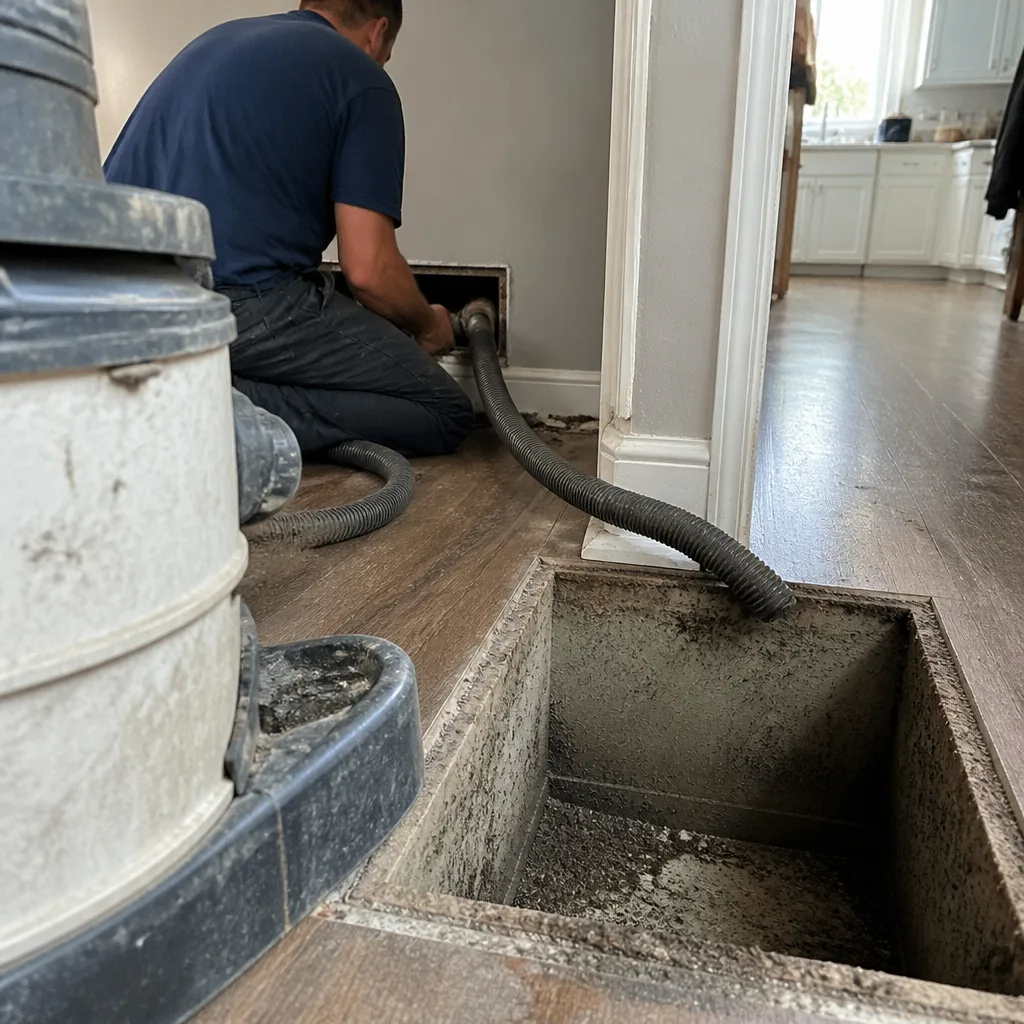 Before
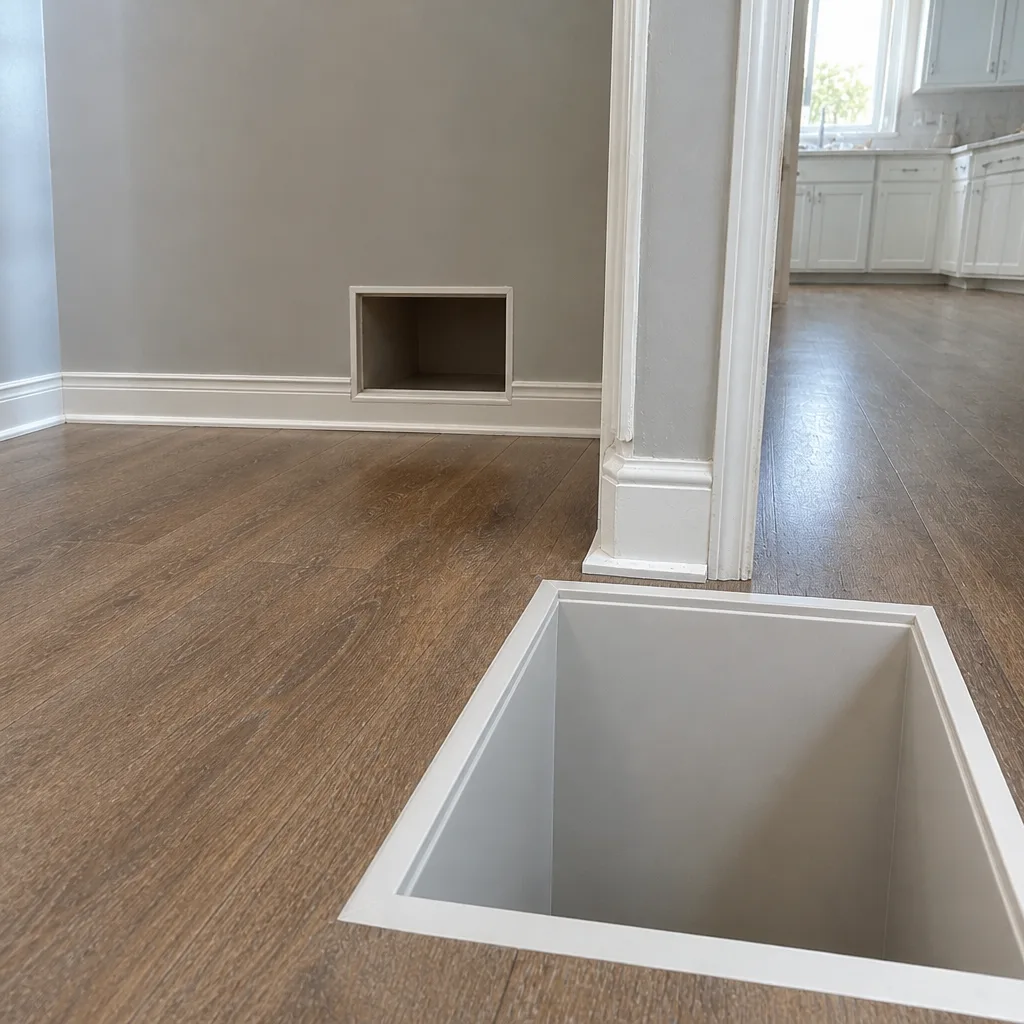 After
When to Call a Professional
Call a professional when duct work crosses the maintenance line or when a health concern is present. If you see obvious damage like crushed or disconnected runs, if the system is struggling to heat or cool certain rooms, if you’re getting inspection findings on a home you’re selling, or if a cleaning revealed suspect insulation, get a professional out. Very specific situations, like finding a duct run completely detached in a crawlspace, aren’t a weekend project. Doing it yourself, without the right tools and without a permit for the modification, means you’ll likely end up redoing it later with a contractor, and with a worse record of what was done.
Thrive Air Duct Cleaning offers free estimates in Louisville: call (866) 875-5603. We answer 24/7. Fast dispatch from 7am to 7pm, Sunday through Friday. We handle cleaning and repair, and we’ll tell you upfront when a job needs a licensed mechanical contractor and a permit.
Frequently Asked Questions
No. Routine air duct cleaning in Louisville is considered maintenance, not construction, and does not require a permit through Louisville Metro Code Enforcement. Cleaning professionals are also not required to hold a Kentucky mechanical license to clean ducts, which is why choosing a contractor with proper equipment and documentation matters more here than the permit.
When the work modifies the duct system rather than just cleaning it. Replacing sections of rigid duct, rerouting runs, adding supply or return branches, resizing a trunk, or converting flex to rigid typically requires a permit under the Kentucky Mechanical Code. Resealing joints, re-taping, and minor reconnection usually don’t. Confirm with Louisville Metro before committing to any repair.
A licensed HVAC or mechanical contractor can pull permits for duct modification and installation work. A duct cleaning contractor generally can’t, and doesn’t need a specific state license to clean. If the work crosses the permit line, you need a licensed mechanical contractor involved. If it’s cleaning or basic reconnection, a specialist cleaning company handles it.
Possibly, yes. Older housing stock in neighborhoods like the Highlands, Old Louisville, and Germantown sometimes has flex duct from an early retrofit, degraded insulation, and in some cases asbestos-containing materials on duct or pipe insulation. If any of those come up during cleaning, stop and have the material evaluated by a qualified professional before disturbing it. Repair of the surrounding duct is a good moment to confirm permit requirements.
The right answer is a written estimate for the repair before any work starts, plus a conversation about whether a permit is needed. Don’t accept a verbal “we can fix it now” with no documentation. Take our team’s approach: we stop, explain the finding, and give you a written estimate. Call (866) 875-5603 with questions. We answer 24/7. Fast dispatch from 7am to 7pm, Sunday through Friday.
Yes. Keep permit records, inspection sign-offs, itemized invoices, and before-and-after photos in one place. Kentucky real estate buyers and lenders may ask for proof of proper duct repair, and cleaning documentation is the simplest answer to “was this system actually cleaned?” A strong record is a soft advantage at negotiation; no record is a problem.
The Bottom Line
Louisville homeowners who understand the difference between cleaning and modification are protected at every stage. Cleaning is maintenance and needs no permit. Repair that changes the duct system usually falls under the Kentucky Mechanical Code and may need a permit and inspection through Louisville Metro Code Enforcement. Older housing stock, especially in the Highlands, Old Louisville, Germantown, and Clifton, raises real questions about flex duct age and asbestos-containing insulation. Verify licensing when repair work is involved, keep your paperwork, and get written before-and-after documentation on every cleaning. That single file is the difference between a smooth transaction and one you renegotiate from a position of weakness.
Call (866) 875-5603 for a free estimate. We answer 24/7. Fast dispatch from 7am to 7pm, Sunday through Friday. Thrive Air Duct Cleaning handles cleaning and repair with professional-grade equipment, and if a job needs a licensed mechanical contractor and a permit, we’ll say so clearly. See what a proper cleaning looks like at Thrive Air Duct Cleaning.
Written by the team at Thrive Air Duct Cleaning.