
Last updated November 14, 2026
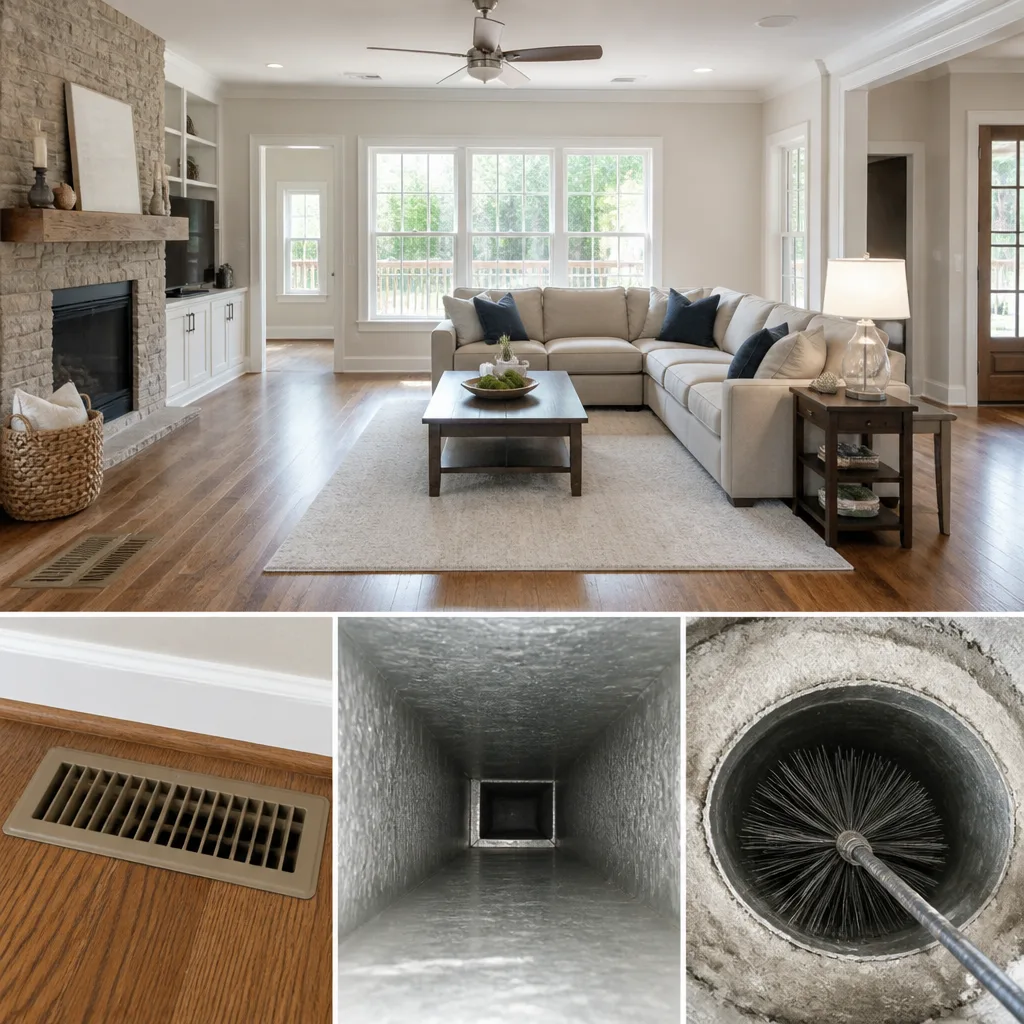 Whole-home duct cleaning
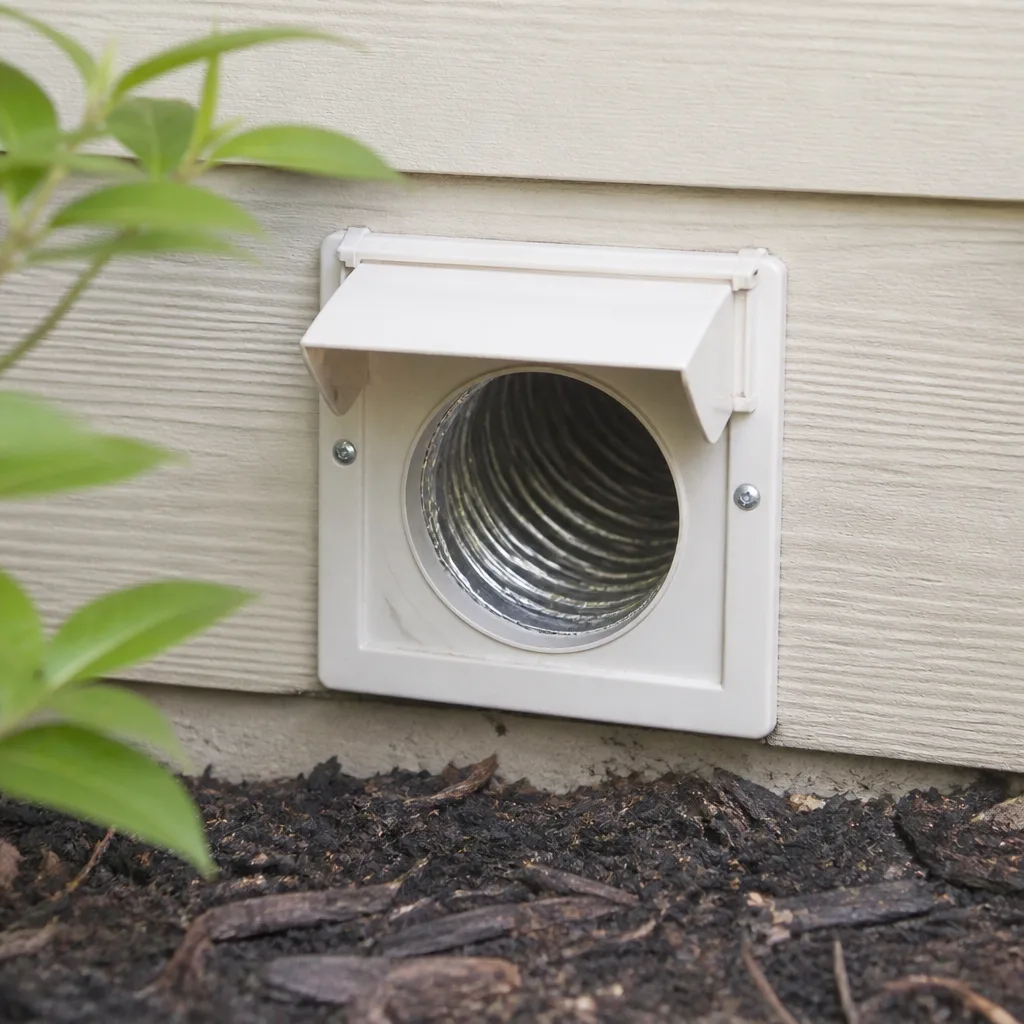 Dryer vent cleaning
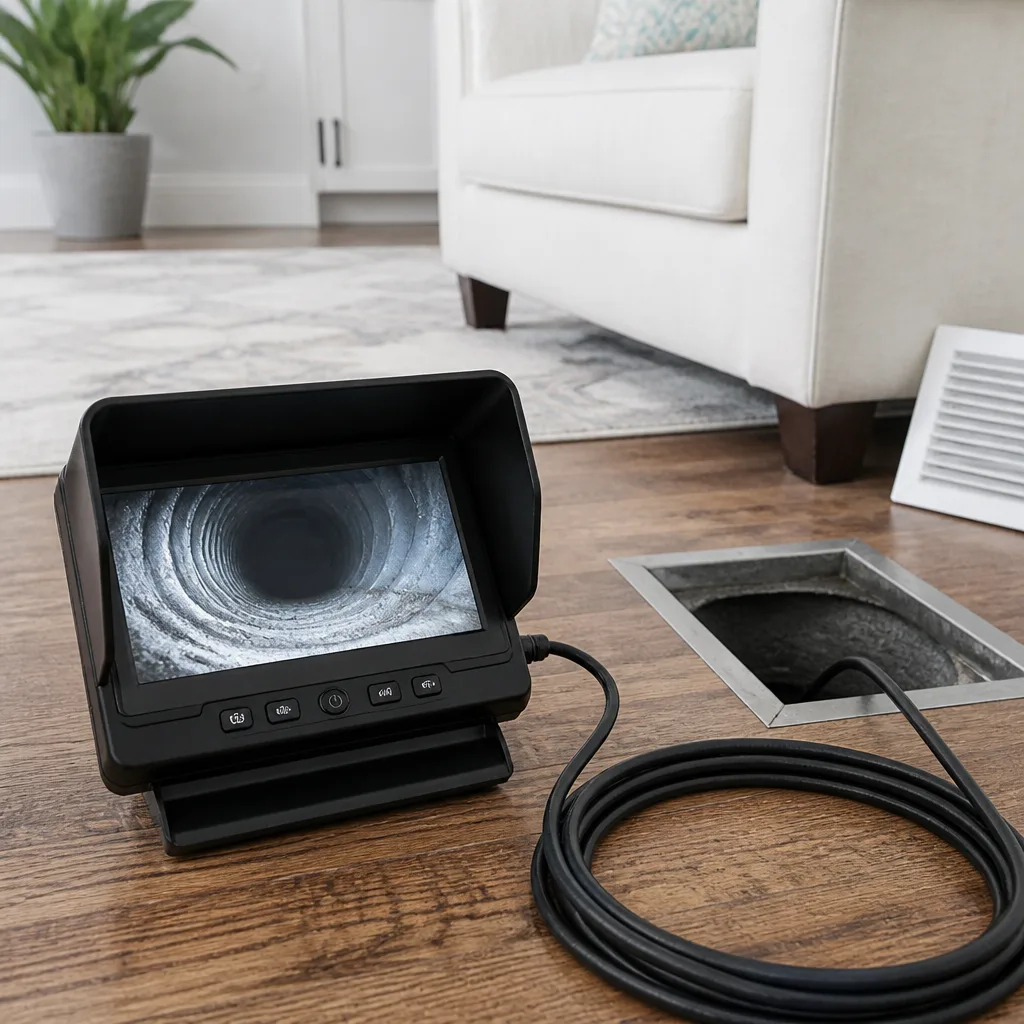 Camera inspection
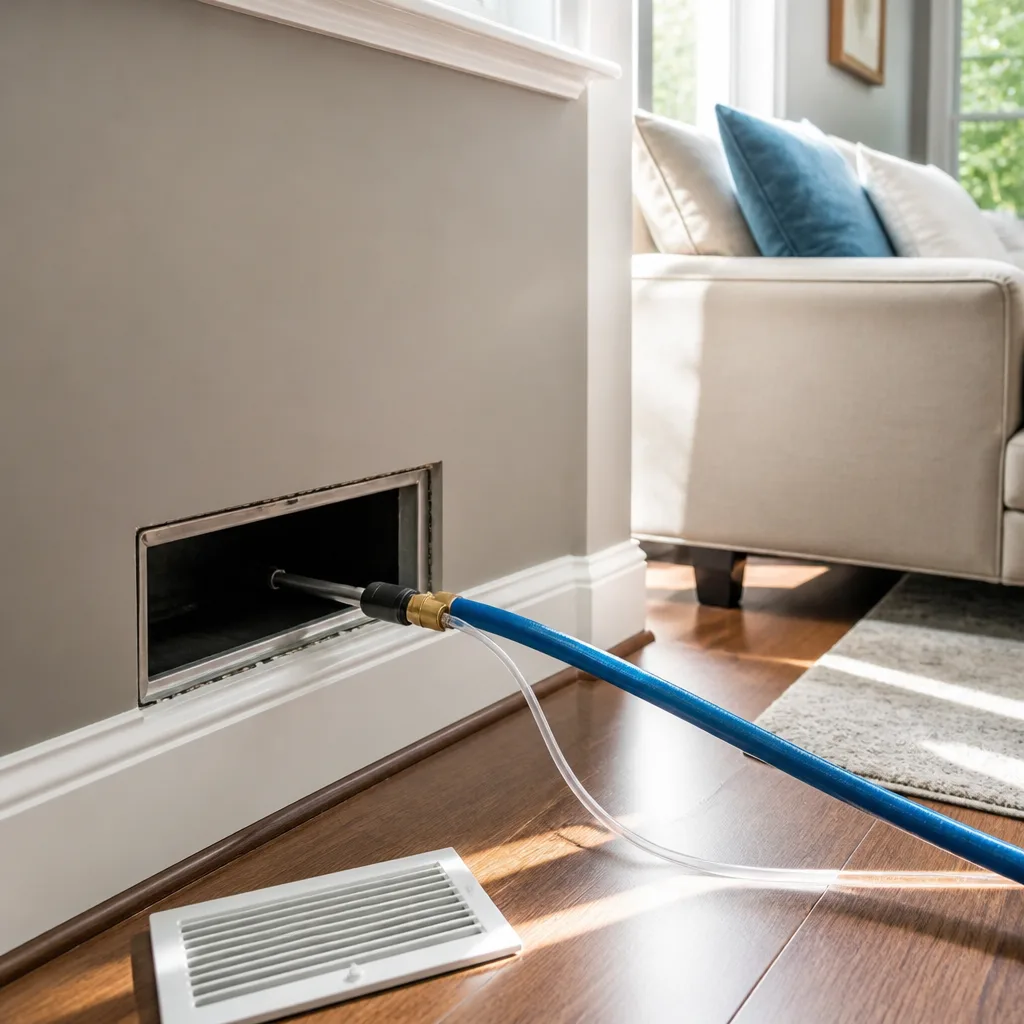 Sanitizing & deodorizing
Whole-system duct and dryer vent check with before-and-after photos - you see exactly what came out of your vents
That "$99 whole-house special" is a bait ad - the real number appears once they are in your hallway, or the "clean" is a shop-vac at the register. We photograph the inside of your ducts before and after instead.
Air Duct Cleaning Troubleshooting in Louisville: Common Problems and How to Fix Them
If your vents are blowing weak air after a recent duct cleaning, the cleaning probably wasn’t the problem, and it wasn’t the solution either. A lot of homeowners in Louisville pay for a cleaning, feel a difference for a week, then watch the same symptoms creep back. That’s because weak airflow, musty smells and uneven room temperatures usually come from one of three different sources, and only one of them is actually dirt. This guide walks you through a decision tree we use ourselves: figuring out whether you’re dealing with a debris buildup, a breach in the ductwork, or a mechanical failure in the system before you spend a dollar on the wrong fix.
Quick Answer
Start troubleshooting with two signals: airflow and smell. Weak airflow in every vent across the house usually points to a mechanical issue (blower, filter, or blocked return). Weak airflow in just one or two rooms almost always means a duct breach or a disconnected run. A musty smell that lingers after cleaning points to moisture in the duct liner or drain pan, not leftover dust. Matching the symptom to the cause before you book a service is what saves time, money and repeat visits.
Styles & brands we work with
- Whole-home duct cleaning
- Dryer vent cleaning
- Camera inspection
- Sanitizing & deodorizing
Table of Contents
- Is It a Dirty Duct, a Duct Breach, or a Mechanical Failure?
- Diagnosing Weak Airflow: Room-by-Room vs. Whole-House
- What Smell Tells You About Your Ductwork
- Why Louisville Humidity Makes Duct Problems Worse
- Shop-Vac Cleaning vs. Rotary Brush and Negative Pressure
- When Troubleshooting Leads to Repair, Not Another Cleaning
- Dryer Vent Symptoms That Get Mistaken for Duct Problems
- What You Can Safely Check Yourself
Is It a Dirty Duct, a Duct Breach, or a Mechanical Failure?
Almost every air duct problem in Louisville falls into one of these three buckets, and the fastest way to narrow it down is a five-minute check before you call anyone.
Dirty ducts announce themselves slowly. You’ll notice dust collecting on the register covers faster than usual, a slight stale smell when the system first kicks on, or visible dust film on furniture within days of cleaning the house. The system still moves air reasonably well, but it moves contaminated air.
A duct breach looks different. Some rooms get strong airflow while others barely get a trickle. The system seems to run constantly but doesn’t reach the thermostat setting in parts of the house. In older Louisville homes with attic or crawl-space ductwork, disconnected joints and torn flex are common, and a breach can waste a meaningful share of the air you paid to condition before it ever reaches a room.
A mechanical failure affects every vent equally. The blower motor may be failing, the air filter may be clogged solid, or a return may be blocked. Airflow is weak or absent across the whole house, not just in one wing.
- Walk room to room and note which vents feel strong, weak, or dead.
- Replace the filter and recheck in an hour before assuming anything else.
- If only some rooms are weak, suspect a duct breach. If all rooms are weak, suspect the air handler.
- If airflow is fine but the air smells, suspect moisture or debris.
Diagnosing Weak Airflow: Room-by-Room vs. Whole-House
The pattern of weak airflow usually answers the question before a technician walks in the door.
Weak airflow in one or two rooms, especially rooms at the end of the trunk line or rooms above a garage, points to a breach, a crushed run of flex duct, or a length of ductwork that was never properly sized. This is very common in Louisville neighborhoods where additions, sunrooms and converted porches were ducted off the main system without recalculating airflow. The branch simply doesn’t have enough pressure behind it.
Weak airflow in every room points to the equipment. Start with the filter, then the blower, then the return duct. A blower wheel caked with dust can lose noticeable capacity even though the motor still runs. A return that’s undersized for the system will starve every vent in the house at once.
Here’s what to rule out before doing anything else:
- Furniture or a rug covering a return grille
- A filter that hasn’t been changed since last season
- A supply register with a damper that got closed during the last cleaning
- An interior door that seals the room so tightly the vent can’t deliver air
If all four check out and the pattern still holds, it’s time to look inside the ductwork itself. A proper diagnostic involves camera inspection and pressure readings, which is where professional-grade gear makes the difference. When the diagnosis points to a breach, our Thrive Air Duct Cleaning team handles repair alongside cleaning so the root cause actually gets addressed.
What Smell Tells You About Your Ductwork
Musty air after a cleaning is one of the most common complaints we hear in Louisville, and it almost never means the cleaning was skipped. It usually means moisture is sitting inside the system, and moisture doesn’t get vacuumed out.
The two usual suspects are the duct liner and the drain pan. Liner is the porous inner surface of many metal ducts, and once it’s damp, it holds that dampness and grows biological growth even after a thorough clean. The drain pan near the air handler collects condensate, and if it doesn’t slope correctly or the drain line clogs, standing water sits there all summer feeding the smell every time the blower kicks on.
Smell mapping helps narrow it down:
- Musty and earthy: moisture in the liner or drain pan
- Sharp and chemical: likely a mechanical or refrigerant issue, not ductwork
- Burnt or hot plastic: shut the system down and call for service, this is a safety issue
- Stale and dusty: debris that a proper cleaning should address
If the drain pan or liner is the source, cleaning alone won’t solve it. You either dry and treat the liner, or you replace the affected section. This is exactly the kind of upstream cause our duct repair work exists to catch. If the smell keeps you from sleeping, our Louisville team can run a full system inspection and tell you plainly whether it’s a cleaning job or a repair job.
Why Louisville Humidity Makes Duct Problems Worse
Louisville sits in a climate where relative humidity swings between a muggy summer and a cold, dryer winter, and that swing is hard on ductwork. Systems installed with one season in mind tend to struggle in the other.
Summertime is when moisture problems really build. The air handler runs hard, condensate forms on cold metal, and any gap in insulation becomes a condensation point. Ducts routed through unconditioned crawl spaces and attics can sweat all season, saturating nearby insulation and giving dust a wet surface to cling to. Musty smells that appear only in July and August are a strong signal you’re looking at condensation, not dirt.
Winter pushes the other direction. Cold air from a leaky return dilutes the warm supply air, so the system runs longer than it should and the furnace works harder to hit the setpoint. Dust dries out and gets airborne more easily, which is why a lot of homeowners notice visible dust on registers in late fall.
Practically speaking, that means Louisville ductwork benefits from inspection twice a year, not once. Run the system with the fan on in spring before cooling season and again in fall before heating season, and listen for the sounds that tell you whether the air is actually going where it should. Replacing a failed filter before the season turns is the cheapest way to protect every run downstream of it.
Shop-Vac Cleaning vs. Rotary Brush and Negative Pressure
Not all duct cleanings accomplish the same thing, and the difference is almost entirely about equipment. A shop-vac at the register pulls loose dust from the first few feet and stops there. The bends, the joints and the vertical runs of ductwork still hold what was there before.
Professional-grade equipment works differently. A rotary brush on a flexible whip reaches around bends, loosens material stuck to the walls, and keeps it moving while a high-powered negative-pressure vacuum holds the duct under vacuum so nothing escapes into the room. Abatement Technologies negative-air units are the same class of equipment used in restoration and industrial work. Rotobrush systems are built specifically for residential ductwork with the flexibility to follow turns. Nikro equipment covers the reach and suction side.
Here’s what that contrast means in practice:
- A shop-vac runs at the register for a few minutes and pulls visible dust.
- A rotary brush system is inserted at the register and driven through the full length of the run while a negative-pressure unit seals the system under vacuum.
- The brush loosens stuck debris at every bend and joint, not just the straight sections.
- The debris is captured by the negative-pressure unit and removed from the space, not blown back into the room.
- Before-and-after photos of your own ducts are taken so you can see what changed.
If you’ve had a cleaning that didn’t seem to do anything, the equipment is usually the answer. Professional-grade, residential-priced work is what we bring to air duct cleaning in Louisville, and we’ll show you the difference before we leave.
When Troubleshooting Leads to Repair, Not Another Cleaning
At some point, more cleaning stops helping and the actual fix is repair. The trick is knowing when you’ve reached that point.
These are the signs a section of ductwork needs sealing or replacement rather than another pass with the brush:
- Visible gaps at joints, especially where flex meets metal
- Compressed or crushed flex duct in an attic or crawl space
- Torn or disconnected sections behind a register
- Duct tape peeling away from joints (the gray fabric stuff fails in a few years)
- Damp insulation or a rusted duct body, which signals an ongoing moisture problem
- Airflow that doesn’t improve after a proper cleaning, meaning the duct itself is failing
Repair usually means sealing joints with proper mastic or metal-backed tape, reconnecting or replacing damaged flex runs, and in some cases installing a new section where the old one is too far gone. Once the ductwork is sealed, the cleaning you already paid for lasts longer because the system isn’t pulling unfiltered air in from the attic or crawl space.
This is where having one team handle both matters. At Thrive, the technicians who clean your ducts are the same ones who repair them, using the same equipment. That single-specialty focus means every technician is trained specifically for air systems, not plumbing on Monday and ductwork on Tuesday. We clean it, we repair it, we clear it. If you’re tired of repeat cleanings that don’t hold, call (866) 875-5603 for a free estimate.
Dryer Vent Symptoms That Get Mistaken for Duct Problems
Homeowners often call about “duct problems” that turn out to be the dryer vent. The two systems share a wall, sometimes share a utility closet, and both show up as weak airflow if you’re not looking closely.
The symptoms that point to the dryer vent rather than the HVAC ductwork:
- Clothes take two cycles to dry
- The dryer feels hot to the touch on top
- Lint collects behind the dryer or on the floor around it
- The laundry room gets noticeably more humid when the dryer runs
- The exterior vent flap barely moves
A dryer vent servicing Louisville homes collects lint in the same way ductwork collects dust, and lint that builds up in a long or poorly routed run is a fire risk. Most dryers need their vent cleaned about once a year, more often in homes with long vent runs or lots of laundry. If you haven’t had it done, the fix is straightforward and often gets bundled with the duct cleaning visit for one trip.
Our dryer vent cleaning in Louisville is one of the three services we focus on, so we can check both systems in one visit and tell you which one is actually the problem.
What You Can Safely Check Yourself
There’s plenty you can diagnose on your own without touching anything dangerous. Then there’s a shorter list of things you shouldn’t.
Safe checks:
- Change the air filter and recheck airflow an hour later.
- Open every supply register and check whether the damper is open.
- Hold a tissue to each supply grille to feel relative airflow across rooms.
- Look at the visible duct runs in the attic or crawl space for disconnections and collapsing flex.
- Check the exterior dryer vent flap while the dryer is on.
- Look at the drain pan near the air handler for standing water.
Leave to a professional:
- Opening the air handler cabinet (dangerous if the system isn’t fully de-energized)
- Climbing into a crawl space with limited clearance
- Removing or re-sealing ductwork sections
- Anything involving the electrical panel, refrigerant lines, or gas connections
If your diagnostic sits in the “professional” column, that’s the point to call. Same-day service is often possible, and the price is set per job by a written estimate agreed before work starts.
Common Mistakes to Avoid
- Book a cleaning before diagnosing the cause. If the issue is a duct breach or a failing blower, cleaning won’t fix it and you’ll be right back on the phone in a month. Run the airflow and smell checks first, every time.
- Trust a per-vent coupon price. A rock-bottom quote per vent almost always leads to a far larger invoice once the technician is in the house and “discovers” problems. The honest way to price ductwork is a flat price per system, agreed before work starts.
- Ignore musty smells after a cleaning in Louisville. Our humidity swings mean a smell that appears a week after cleaning usually signals moisture in the liner or drain pan, not leftover dust. Treat it as a repair issue, not a cleaning issue.
- Rely on a shop-vac any deeper than the register. A shop-vac at the grille physically can’t reach the bends and joints where accumulated debris lives. If that’s all a crew brings through the door, they aren’t cleaning the ductwork.
- Skip the dryer vent because the ducts “look fine.” The two systems are separate, and a dryer vent clogged with lint can be a serious safety risk even when the HVAC ducts are spotless.
- Assume more frequent cleaning solves everything. Cleaning a breach on a regular schedule is like treating a leaking roof with a squeegee. Fix the breach, then clean.
- Home-inspect anything electrical or structural. Crawl spaces, air handler cabinets and gas connections are places a trained technician belongs, not a homeowner with a flashlight.
See the difference
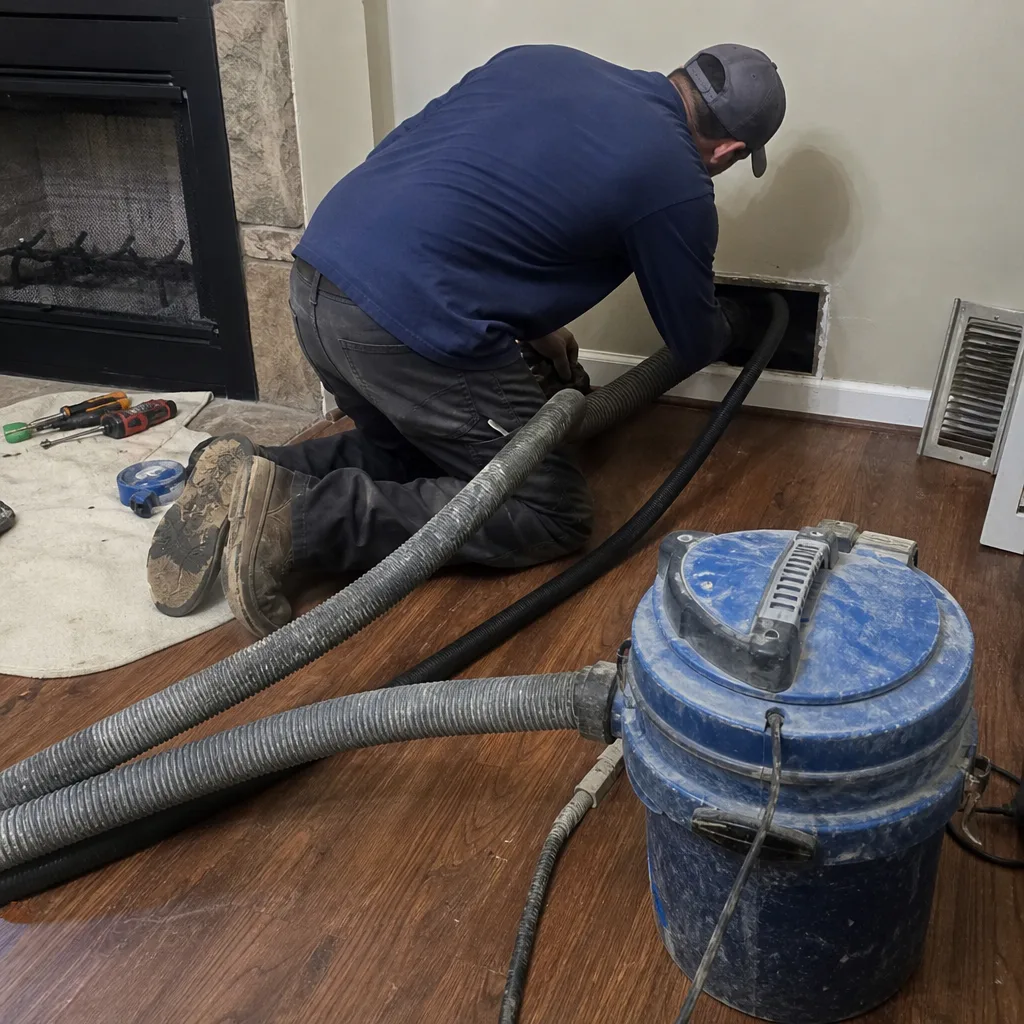 Before
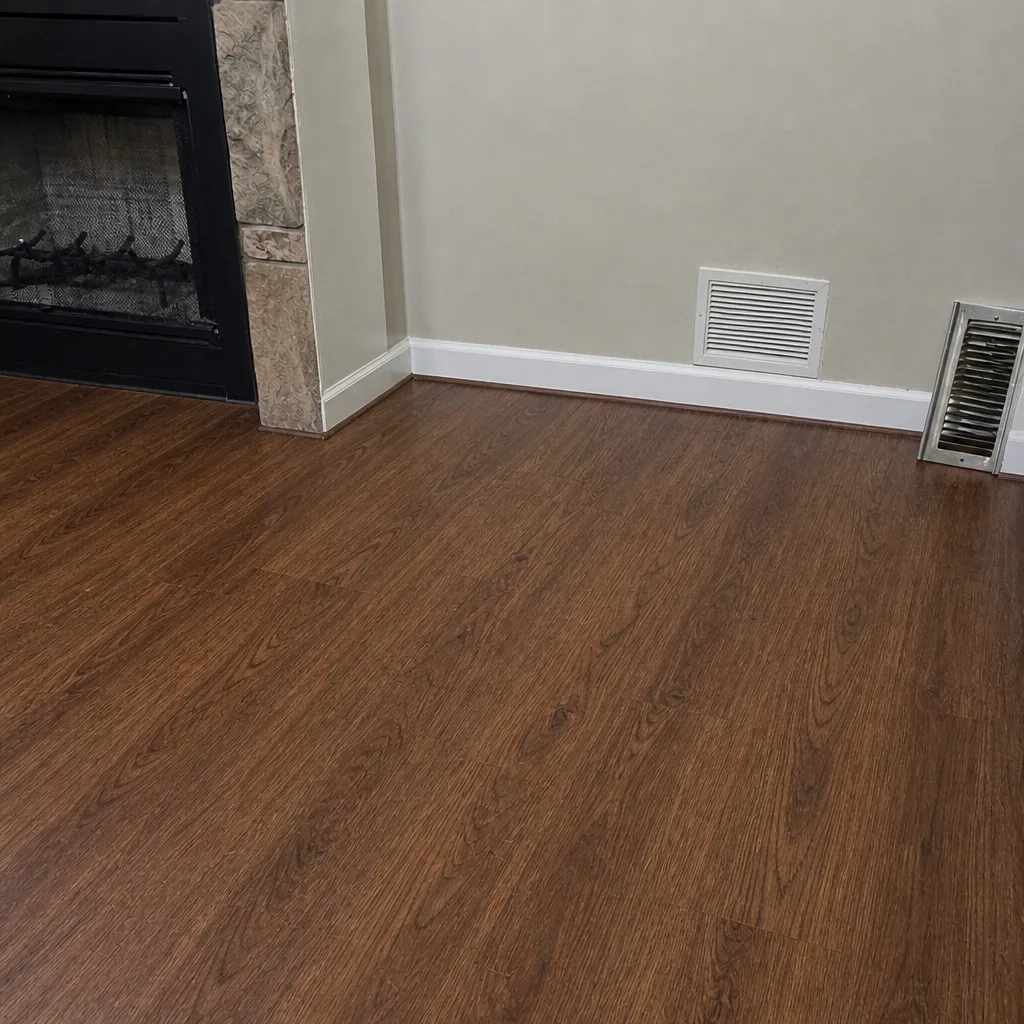 After
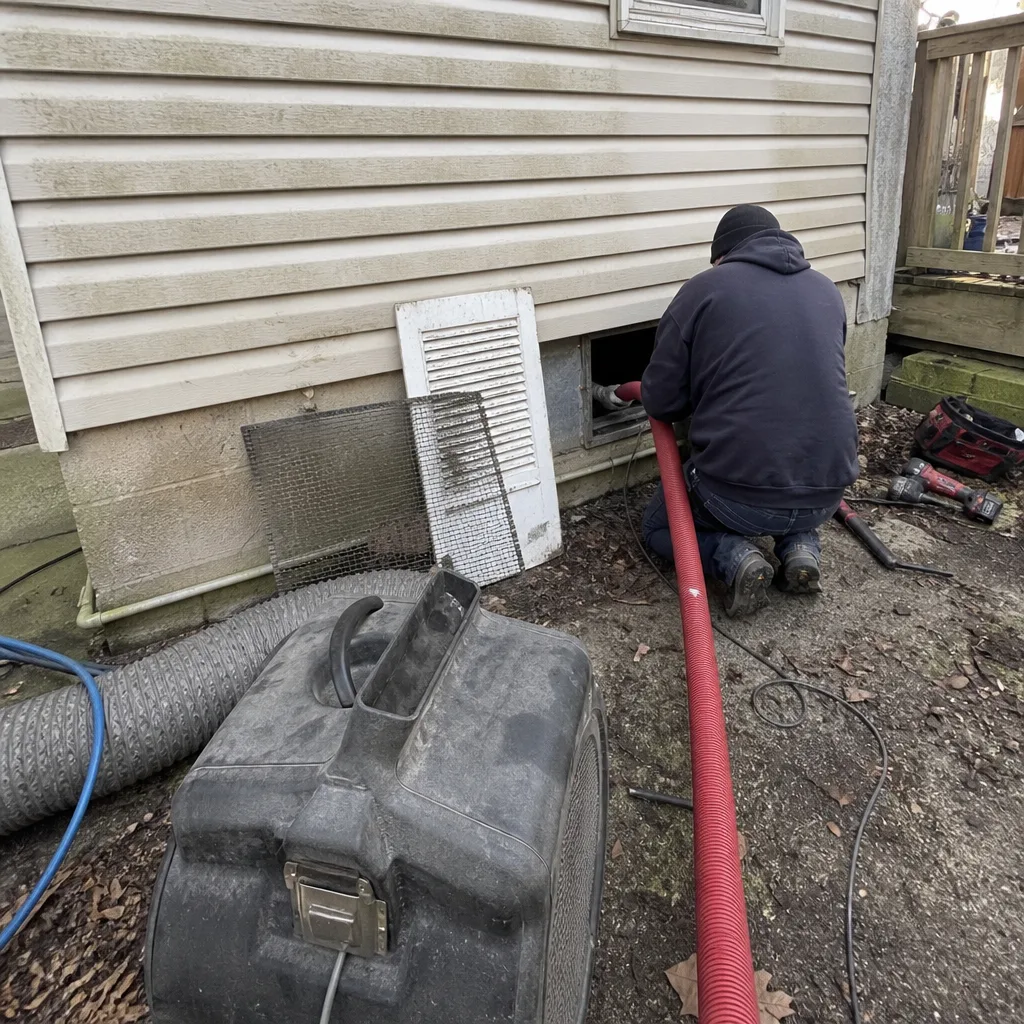 Before
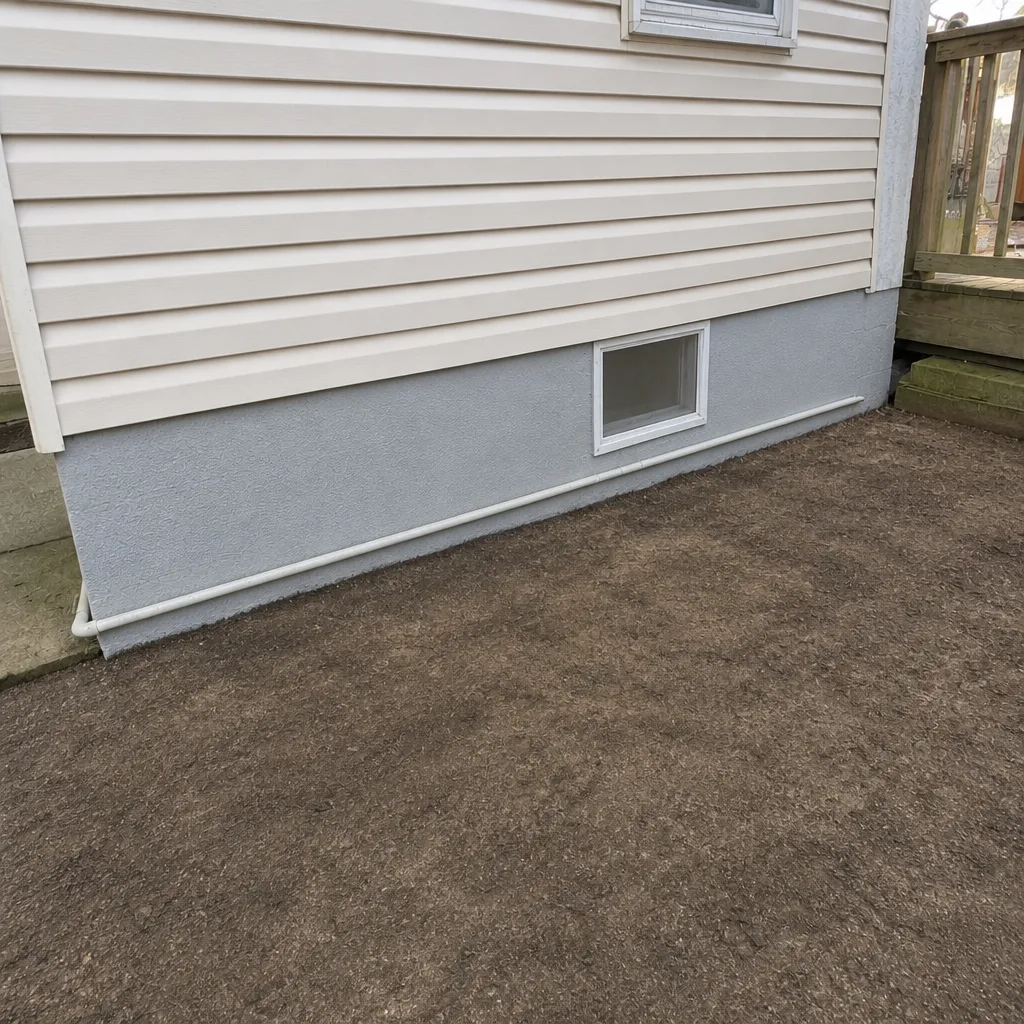 After
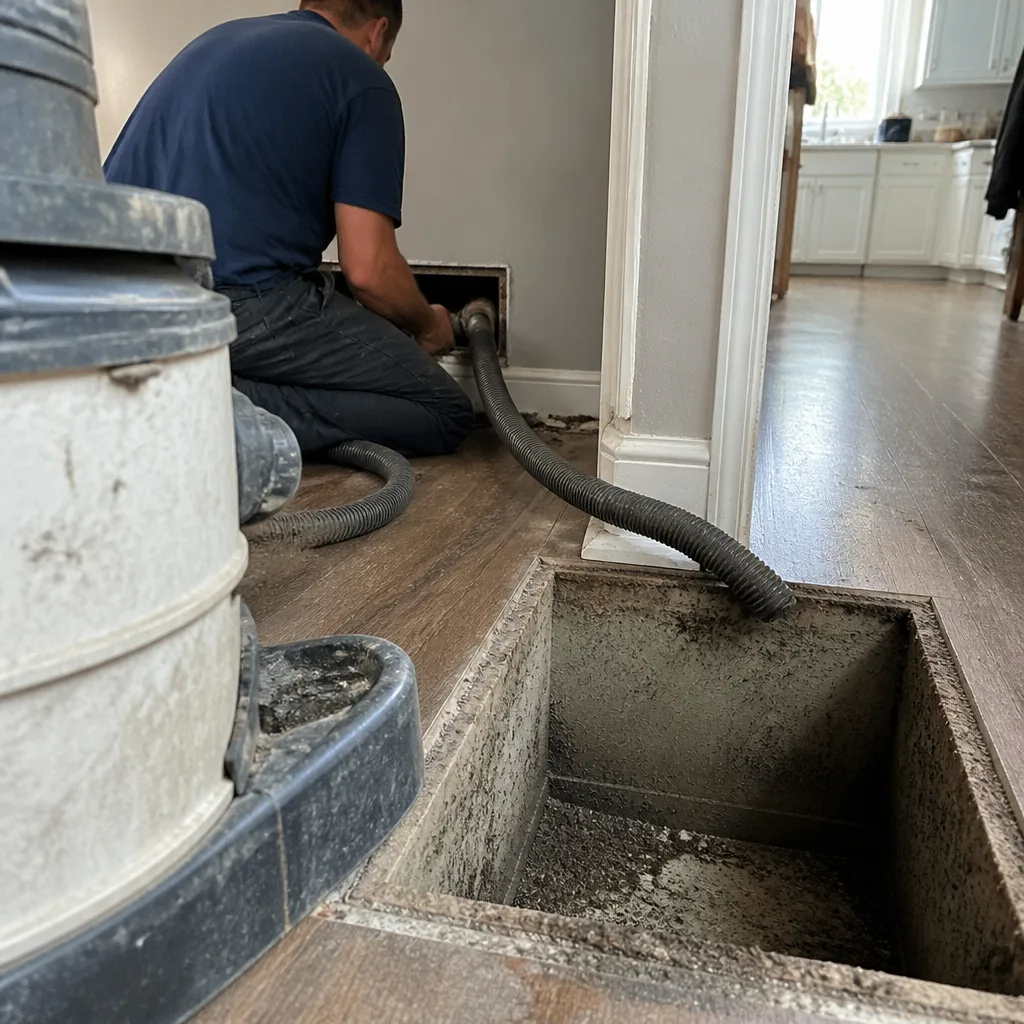 Before
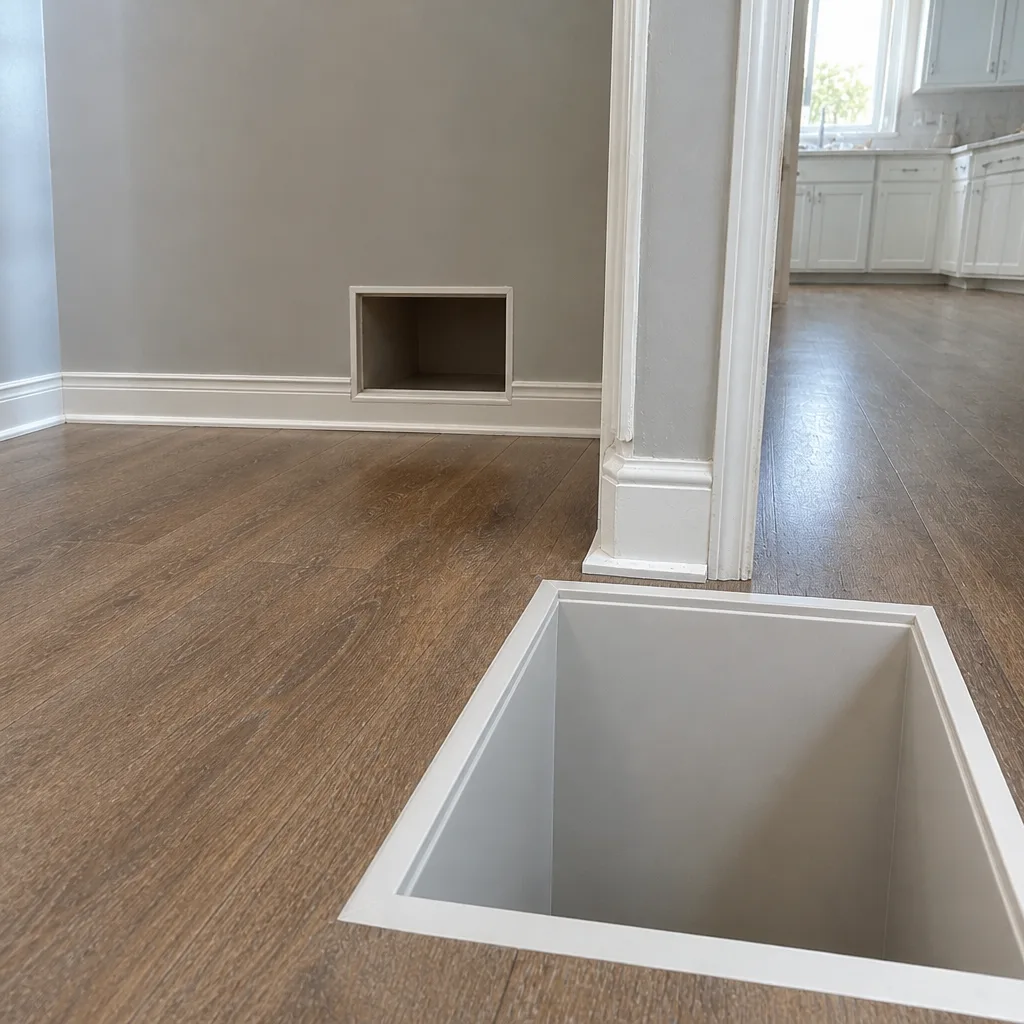 After
When to Call a Professional
Call a professional when your own diagnostics don’t produce a clear answer, or when they produce an answer that’s outside the “safe to check” list. Specific situations that warrant a call: any sign of moisture in the ductwork or drain pan, airflow that’s weak in only one or two rooms and doesn’t improve after replacing the filter, a musty smell that returns after a cleaning, visible disconnections or crushed flex in the attic, or a dryer vent that hasn’t been serviced in years. If you’re unsure whether the symptom points to cleaning or repair, a professional inspection will tell you.
Thrive Air Duct Cleaning offers free estimates in Louisville – call (866) 875-5603. The estimate is free, the price is set per job by a written estimate, and you’ll see before-and-after photos of your own ducts before we leave.
Frequently Asked Questions
Typical air duct cleaning in Louisville runs a few hundred dollars for a standard single-system home, and whole-system pricing is quoted per job depending on square footage, accessible runs, and the number of systems in the home. The written estimate sets the final price. Be wary of per-vent coupons that don’t reflect the real work involved. Call (866) 875-5603 for an exact quote, estimates are free.
Because they’re not quoting the same job. A per-vent teaser price typically covers a light pass with a shop-vac at the register, not rotary brush cleaning with negative pressure through the full run. The purpose of the low number is to get a technician into the house where a much larger invoice gets built on “discovered” problems. We price by the whole system, agree one flat price before work starts, and show before-and-after photos so you can see what was actually done. Call (866) 875-5603 for a transparent estimate.
Ask for before-and-after photos of your own ducts before booking. Any company worth hiring will show you photos of the specific runs they cleaned in your home, not stock images. You should also be able to look at the register yourself and see the difference. If a crew can’t or won’t document the work, that’s your answer. Call (866) 875-5603 and we’ll walk you through what we document on every visit.
Most Louisville homes need a proper cleaning every two to three years, with the schedule tightening for homes with pets, recent renovations, allergy sufferers in the household, or older ductwork that’s showing its age. Homes in humid parts of the region may need more frequent inspection because moisture accelerates buildup. It’s never a yearly must-buy. Call (866) 875-5603 to talk through your specific situation, estimates are free.
A smell that gets worse after cleaning usually means the moisture was there before the cleaning and the cleaning disturbed the surface without addressing it. Musty smells after service in Louisville almost always trace back to damp duct liner or standing water in the drain pan, both of which are repair issues, not cleaning issues. A professional inspection can tell you which one you’re dealing with. Call (866) 875-5603 for a free estimate on the fix.
We repair it. Air duct repair is one of our three services, done by the same team that cleans the ducts, using the same equipment. That means a crushed run, a disconnected joint, or a torn flex section gets fixed in the same visit that cleans the system. Ductwork is what we do, nothing else. Call (866) 875-5603. We answer 24/7. Fast dispatch from 7am to 7pm, Sunday through Friday.
The Bottom Line
Most air duct “problems” in Louisville trace back to one of three causes: debris buildup, a breach in the ductwork, or a mechanical issue in the system. Diagnosing the cause before booking the fix is what saves you money. Use airflow and smell as your two signals, check the safe items on the list yourself, and call a professional for everything else. When you do call, ask for whole-system pricing, before-and-after photos, and a written estimate. Professional-grade equipment from Rotobrush, Abatement Technologies, and Nikro clean what a shop-vac can’t reach, and repair work fixes what cleaning alone never will. Built to Thrive means the air system works the way it was designed to, not just that it’s been touched recently.
Call (866) 875-5603 for a free estimate. We answer 24/7. Fast dispatch from 7am to 7pm, Sunday through Friday.
Written by the team at Thrive Air Duct Cleaning.