
Last updated November 14, 2026
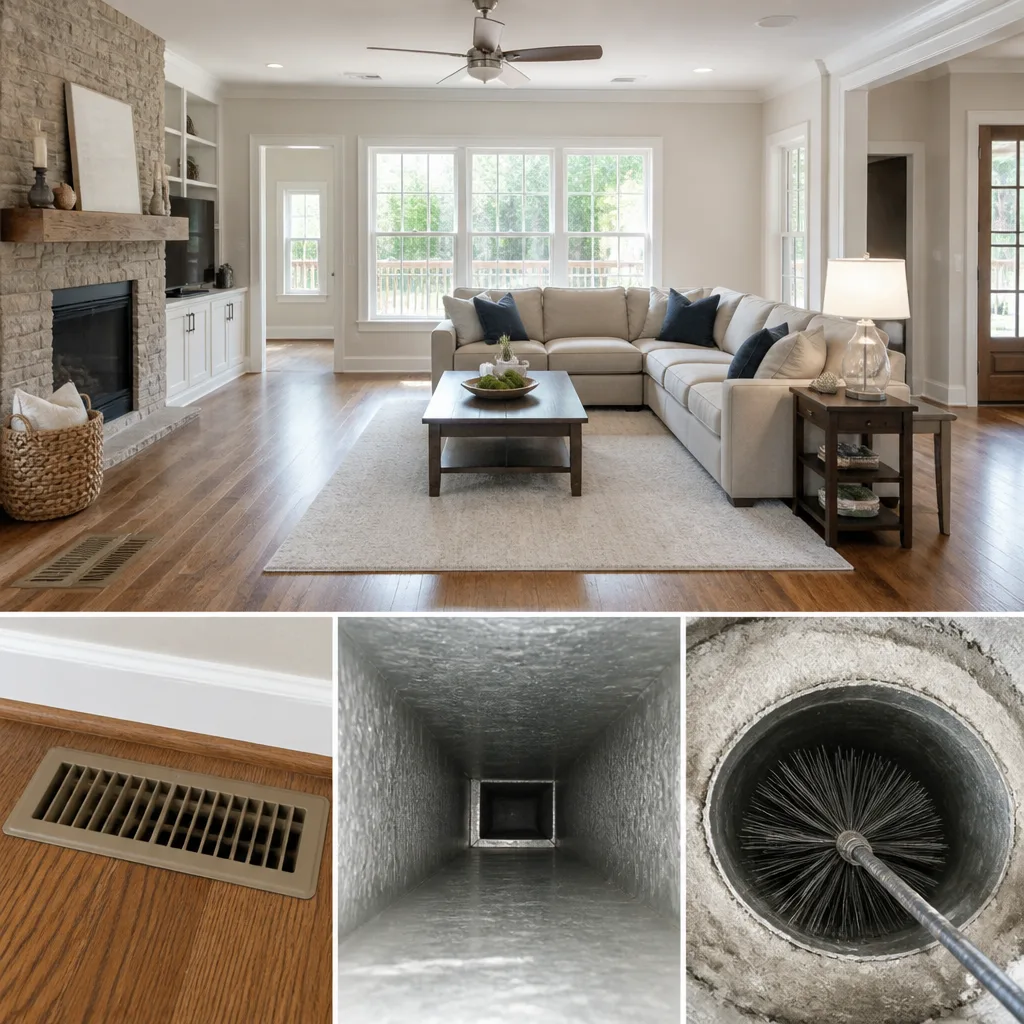 Whole-home duct cleaning
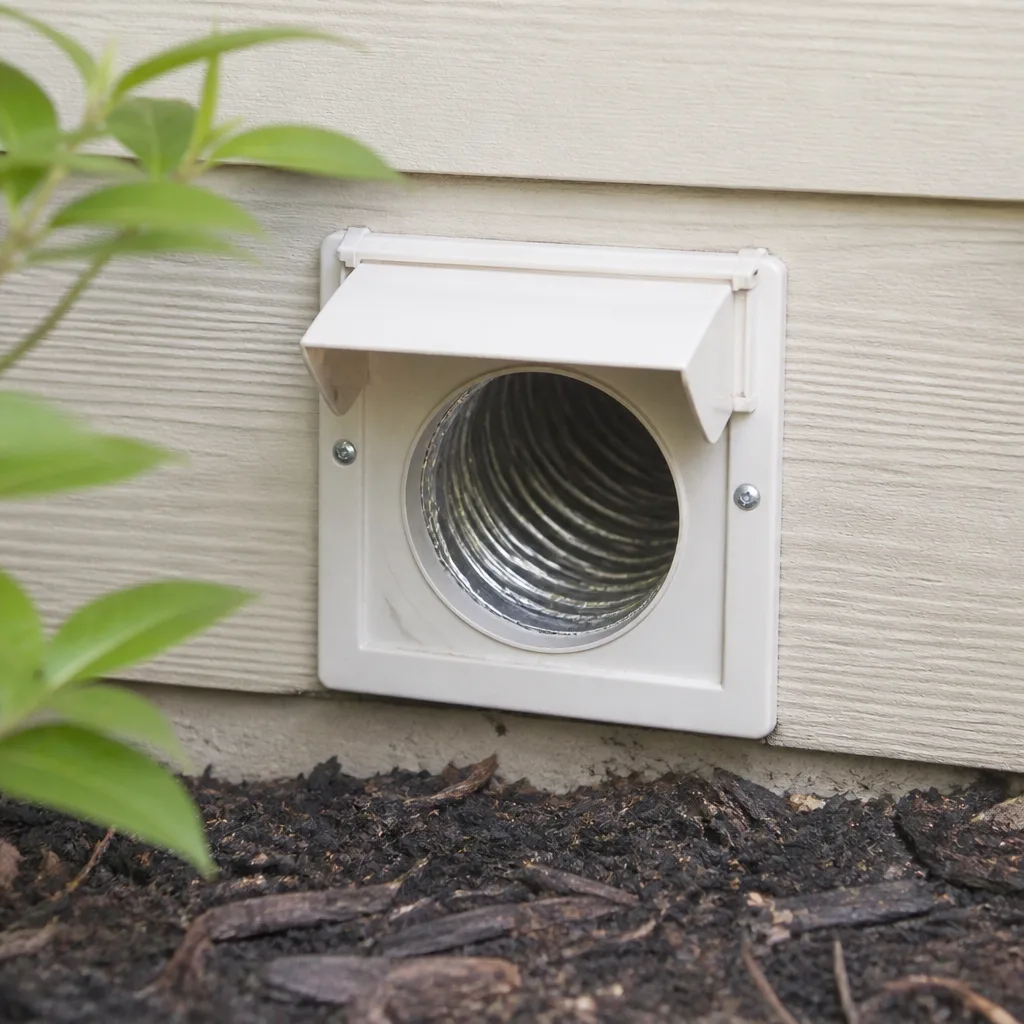 Dryer vent cleaning
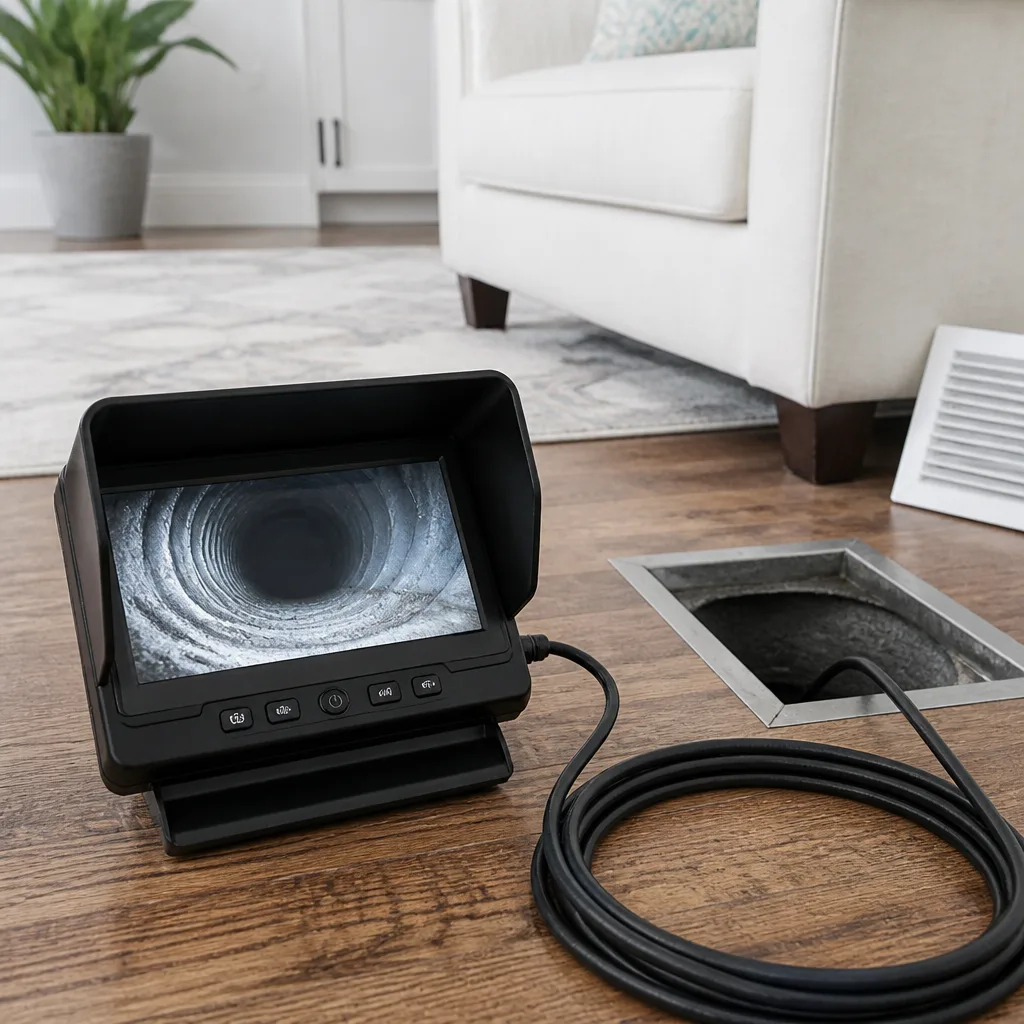 Camera inspection
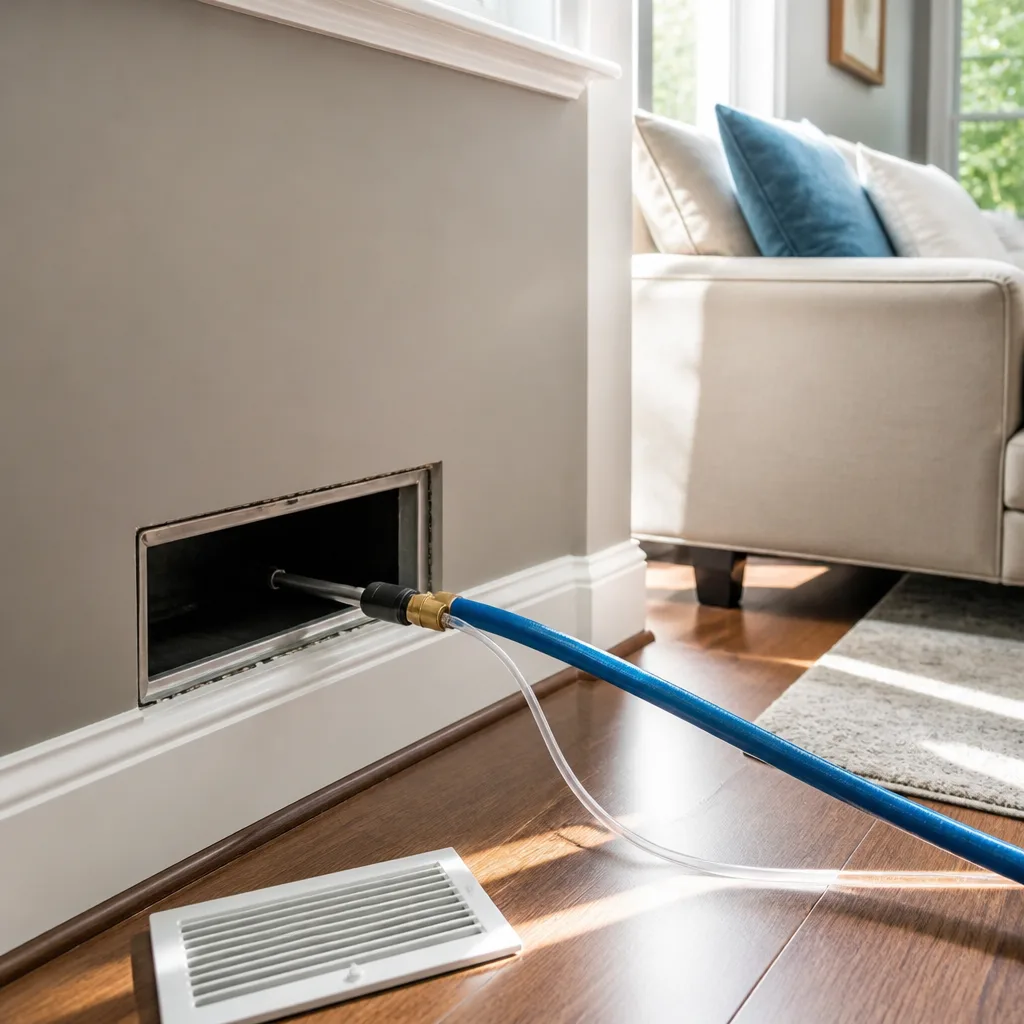 Sanitizing & deodorizing
Whole-system duct and dryer vent check with before-and-after photos - you see exactly what came out of your vents
That "$99 whole-house special" is a bait ad - the real number appears once they are in your hallway, or the "clean" is a shop-vac at the register. We photograph the inside of your ducts before and after instead.
Air Duct Cleaning Maintenance Checklist for Louisville Homeowners
Most duct maintenance checklists online were written by marketing teams, not technicians. They tell you to “change filters regularly” without specifying which MERV rating holds up in Louisville’s spring pollen season versus the heavier particulate load of winter, and they treat every month the same even though your HVAC system in Louisville works through four genuinely different seasons. A checklist isn’t a set of chores. It’s a decision framework: which months demand action, which signs to track between professional visits, when cleaning alone won’t solve the problem, and when you’re actually looking at a repair.
What follows is the version we’d hand a neighbor. It covers filter ratings matched to Louisville’s allergy calendar, register-by-register inspection points you can do yourself, a simple baseline-log method for spotting leaks and blockages as they develop, and the signals that mean your ducts need repair rather than another cleaning pass.
Quick Answer
A working air duct maintenance checklist for Louisville has four seasonal checkpoints (spring pollen load, summer cooling demand, fall transition, winter heating), a filter rating matched to each season, monthly visual checks at every register and return, and a baseline airflow log you update to catch developing leaks. Professional cleaning is typically needed every two to three years, but repair should be evaluated any time you see disconnected joints, crushed sections, or uneven airflow that persists after cleaning.
Styles & brands we work with
- Whole-home duct cleaning
- Dryer vent cleaning
- Camera inspection
- Sanitizing & deodorizing
Table of Contents
- Why Louisville Ducts Age Differently
- The Month-by-Month Louisville Checklist
- Choosing the Right MERV Rating for Louisville Seasons
- What You Can Inspect Yourself Between Professional Cleanings
- How to Log Baseline Airflow at Each Register
- Signs You Need Duct Repair, Not Another Cleaning
- How a Professional Cleaning Visit Actually Works
- The One-Page Annual Checklist
- Common Mistakes to Avoid
- When to Call a Professional
- Frequently Asked Questions
Why Louisville Ducts Age Differently
Louisville sits in a transition zone where the system runs hard in both summer and winter, which is the real reason duct maintenance here looks different from a checklist written for a mild coastal climate. That swing matters for your ductwork because it means your system moves a large volume of conditioned air twice a year, not once. We’ve seen the pattern repeat across neighborhoods from the Highlands to Okolona: ducts that get airflow from both the heating and cooling cycles accumulate a mixed load of contaminants, and any small joint failure gets stress-tested every time the season changes.
The pollen calendar is the second factor. Louisville’s spring tree pollen runs through much of March and April, followed by grass pollen into early summer. Ragweed picks up in late summer and early fall. A filter rated for a single season won’t hold up through that sequence, and your registers and return grilles collect the difference visibly.
Winter adds a third variable. Heating season here pulls dry air through the system for months, and any dust or debris sitting in ductwork becomes airborne more readily when relative humidity drops. That’s why a cleaning that seemed fine in July can feel insufficient by January.
A maintenance plan that accounts for these three factors does more than a generic quarterly reminder. It tells you what to check, when to check it, and what result means it’s time to call a professional. Our Thrive Air Duct Cleaning approach treats that sequencing as the foundation of the whole service, because cleaning without a repeatable maintenance rhythm just gets you back to square one.
The Month-by-Month Louisville Checklist
The point of a month-by-month checklist is to align duct care with the HVAC season transitions that actually stress your system. Here’s the sequence we recommend for Louisville.
January – February (Deep heating season)
- Check the filter every 30 days; heating season loads filters faster than most people expect.
- Listen at return vents for a whistling or roaring sound, which can indicate a restricted return or a partially collapsed duct run.
- Feel for uneven heating between rooms on the same floor; a colder room may point to a duct leak, not a furnace issue.
March – April (Spring pollen transition)
- Replace the filter as pollen begins, and consider stepping up to a higher MERV rating (see the filter section below).
- Vacuum supply registers and return grilles by hand; pollen debris collects visibly at the grille surface.
- Inspect the outside of accessible duct runs for dust streaks or dark marks at joints, both signs of a developing leak.
May – June (Cooling season startup)
- Before switching to cooling, log your baseline airflow (see the register log section).
- Check that all supply registers are fully open and unobstructed by furniture or rugs.
- Look at the air handler closet or basement for standing moisture; condensation issues become visible at the seasonal switch.
July – August (Peak cooling and grass pollen)
- Change the filter on an accelerated schedule if the system runs continuously.
- Sniff for musty odors at registers; a persistent smell often indicates moisture in the ductwork, not just the filter.
- Check register airflow again and compare to your spring baseline.
September – October (Fall transition and ragweed)
- Do a full register-by-register inspection before heating season.
- Log a new airflow baseline as the system transitions to heating.
- Look for small debris or dust in the bottom of supply boots, where gravity collects what the system drops.
November – December (Heating startup)
- Swap to a heating-season filter and check the register diffusers for heat-dust puffing on startup.
- Compare your latest airflow log against the spring and fall baselines.
- Book a professional cleaning evaluation if the system hasn’t been cleaned in two to three years.
That month-by-month structure gives you a working rhythm you can actually keep. If you’d rather have a pro inspect and reset the baseline in a single visit, our air duct cleaning team covers the full system and can identify what to log for the coming year.
Choosing the Right MERV Rating for Louisville Seasons
MERV rating is the single most misunderstood part of duct maintenance, and it’s also the one thing Louisville homeowners can control in five minutes. MERV stands for Minimum Efficiency Reporting Value: it tells you how well a filter catches particulate at a given size range. Higher isn’t automatically better, because an over-restrictive filter can starve airflow and put strain on the blower.
Here’s a practical sequence for Louisville’s four seasons:
- Spring (tree pollen, roughly March – May): MERV 11 to 13 catches pollen more effectively than the basic MERV 8. If your HVAC system’s blower is already working correctly, this range holds up well.
- Summer (grass pollen and full cooling demand): Stay at MERV 11 to 13 unless you notice reduced airflow at registers, in which case drop back one step.
- Fall (ragweed and transition debris): MERV 11 is a reasonable balance for most Louisville homes. If you have allergy concerns, keep MERV 13 in place.
- Winter (heating season, dry air): MERV 11 if the system is nominal; MERV 8 if you’re noticing short-cycling or weak heat airflow.
The key variable is your blower. A high-MERV filter on a system with marginal airflow creates a worse outcome than a clean MERV 8. If your system uses a thick media cabinet filter (common in older Louisville homes with upgraded HVAC), the MERV rating applies the same way.
Replace or clean your filter on the schedule your filter manufacturer specifies, but treat Louisville’s spring pollen window as a hard reset. Two filter changes in March and one in early summer is more realistic than the “every three months” reminder printed on most boxes. Your filter is the front line; your ducts are what happens after the filter can’t catch everything.
What You Can Inspect Yourself Between Professional Cleanings
You don’t need to open a duct to do useful inspection. Most of the early signs a professional looks for show up at the register face, the return grille, and the accessible joints near the air handler. Here’s what to check without tools.
At every supply register
- Airflow feel: Hold your hand 6 to 8 inches from the register. Is it steady, or does it pulse and weaken? A weak register on one side of a room while the opposite side is strong often indicates a leak.
- Dust buildup: Look at the register fins. Heavy gray or black dust there is a sign that the supply ducting behind it is contributing to the load.
- Staining or moisture: Any water marks or dark streaks at the ceiling boot mean moisture has been in the duct, which needs a professional check.
- Loose louvers or gaps: A register that’s visibly loose at the boot is often a sign the boot connection has separated.
At return vents
- Filter condition: Inspect the filter visible behind the return grille. A filter loaded to the point of being dark gray means you’re overdue.
- Debris on the grille: Pet hair, dust strings, and lint collecting on the return face are useful data on how quickly the system is loading.
- Whistling: A whistle at the return grille is one of the most reliable signs that the return ducting is undersized or blocked.
At accessible duct runs
- Joint tape: Duct tape on joints in Louisville attics and crawl spaces tends to dry, crack, and lose adhesion over time. If you can see it peeling, the joint is almost certainly leaking.
- Sagging flexible duct: Flex duct that dips or hangs at a low point is pinching off airflow and collecting debris in the low spot.
What you notice here becomes the input for the airflow log below.
How to Log Baseline Airflow at Each Register
Airflow logging is the part of duct maintenance most checklists skip, and it’s the one that lets you spot developing leaks and blockages before they show up as dollar figures on your energy bill. It’s simple: measure, record, compare.
You don’t need a balometer. You need a consistent method. A strip of tissue taped lightly at the register (so it deflects, not tears) or a phone app that measures approximate airflow will do for a repeatable comparison. Choose one method and stick to it, because the comparison only works if the method is consistent.
- Choose a stable time to measure. Log when the system has been running steadily for at least 10 minutes and no one is opening doors or operating exhaust fans nearby.
- Record each register separately. Note the room, the register position, and the relative deflection or reading. Take a photo of each register for reference.
- Log returns at the same time. Since the return side carries the total system volume, a change there is often the earliest signal.
- Repeat the log at each season transition. Spring, summer, fall, and winter use the same method at the same time of day.
- Compare quarter to quarter. A register that drops half its output between logs, while the system is otherwise running normally, is a strong signal of a duct leak or an internal collapse.
When the log reveals a drop, don’t assume the filter is the culprit (though check it first). A sudden, uneven drop on one run or one branch is far more likely a disconnected or crushed duct. When you call a professional, the log becomes the most useful diagnostic tool you can hand them.
Signs You Need Duct Repair, Not Another Cleaning
Cleaning removes what’s been deposited. Repair fixes why it’s being deposited. Most homeowners default to a cleaning call when the real problem is a broken duct, and the difference matters for both air quality and system efficiency.
These are the signals that point to repair:
- Persistent dust after cleaning: If dust loads back at the same registers within weeks of cleaning, the ducting is likely leaking or open somewhere, letting attic or crawl space dust in.
- Uneven room performance: A room that’s always warmer or colder than the rest of the house, on the same system and same thermostat, is usually a duct problem, not a room problem.
- Visible joint separation: Any disconnected duct section, especially flex duct, will leak significant airflow and needs repair rather than cleaning.
- Crushed or kinked flexible duct: Crushed runs are common in Louisville attics with tight clearance and are a common source of lost airflow.
- Pest intrusion: Rodent or insect activity inside ducts means openings exist that need to be found and sealed.
- Airflow log changes: A register that has dropped measurably on your baseline log and doesn’t recover when the filter is changed.
Because we handle both cleaning and repair, we can evaluate whether the problem is contamination or structural in the same visit. Our technicians have up to 10 years of experience working specifically on air duct systems, so the assessment isn’t a guess. It’s a recommendation based on what we find inside the duct.
If your home was built or renovated in the last few years, the risk of construction dust in the system is real, and a single cleaning won’t fix a joint that was never sealed correctly. Repair sets the stage for the next cleaning to actually hold. That’s why a complete ductwork solution includes both.
How a Professional Cleaning Visit Actually Works
Understanding the cleaning process is part of the maintenance checklist because it tells you what to expect, what to ask, and how to verify the work. A professional-grade cleaning uses equipment built for the job, not consumer blowers, which is why the difference between a proper service and a shop vac is obvious when you watch the register stages.
Here’s what a proper visit looks like in sequence.
- Inspection and containment. The technician identifies the full duct layout and places containment at supply and return openings. The purpose is to keep the negative pressure controlled and stop collected debris from migrating into occupied space. This is where equipment quality shows: we use Abatement Technologies equipment specifically because it supports proper containment during the job, the same standard restoration contractors rely on.
- Negative-pressure cleaning. A high-volume vacuum system is connected to pull the ductwork into negative pressure for the duration. Compressed-air whips and rotary brushes loosen the deposited material inside the run while the negative pressure carries it out.
- Register-by-register cleaning. Every supply and return is cleaned individually, not treated as a whole-house pass. We work through each opening in sequence.
- Repair evaluation. During cleaning, we inspect every accessible joint and connection. Loose or separated sections get flagged for the repair stage rather than hidden behind a cleaning completion report.
- Before-and-after documentation. We photograph the duct interior before and after so you see the difference before we leave. The report you receive matches the registers you can see.
- Filter restoration and handoff. The final step is restoring the air system, replacing the filter as needed, and walking the airflow baseline you’ve logged so the next cycle starts from a known state.
The equipment matters because cheap service often uses consumer blowers that can’t generate the airflow needed to actually remove deposits. We use Rotobrush and Nikro systems, which are professional-grade machines used by HVAC and restoration contractors. That’s the difference between surface agitation and true removal.
If you’re on the dryer vent side of the checklist, the same sequence applies but the ducting is shorter and the risk is different. Our dryer vent cleaning service addresses lint buildup that reduces drying efficiency and creates a fire risk, and the timing belongs on the same annual maintenance rhythm.
The One-Page Annual Checklist
Here’s the condensed version. Print it, tape it inside a cabinet door near the thermostat, and use it as the master schedule for the year.
- Every 30 days during heating and cooling season: Check the filter, note the color and dust load, and replace when visibly gray.
- March (spring pollen start): Replace filter, step to MERV 11 – 13, vacuum supply registers and return grilles, look for dust streaks at accessible duct joints.
- May (cooling startup): Log a full airflow baseline at every register and return. Record in a phone note with photos.
- July (peak cooling): Check filter condition, sniff for musty odor at registers, and verify all registers are open and unobstructed.
- September (fall transition): Full register-by-register inspection, log a new airflow baseline for the heating season, compare to the May log.
- November (heating startup): Swap to the heating-season filter, check for heat-dust at registers on startup, compare the new airflow log against the May log.
- Every two to three years: Schedule a professional cleaning evaluation; have the technician assess for repair needs at the same time.
- Anytime: Log the signals that point to repair (uneven airflow, persistent dust after cleaning, visible joint separation) and act on them rather than waiting for the next scheduled cleaning.
This is a maintenance framework, not a schedule imposed on you. Adjust the timing if your home is playing host to pollen more than usual, or if you’ve had recent renovations that generate construction dust in Louisville.
Common Mistakes to Avoid
- Treating every MERV rating as interchangeable. A high-MERV filter on a system with marginal blower capacity restricts airflow more than it helps. Match the rating to the season and the blower, not to the highest number on the shelf.
- Cleaning ducts without addressing leaks. Cleaning removes deposited material, but a leaking or separated duct will load back up within weeks. Repair is the long-term solution.
- Skipping the airflow baseline. Without a baseline you can’t detect a developing leak or blockage until it’s severe. Logging at seasonal transitions is what turns the checklist into a diagnostic tool.
- Relying on the printed filter schedule. Louisville’s pollen season is heavier than the “change every three months” label anticipates. Treat March as a hard reset point for the filter.
- Assuming a low quote means the same work. Professional-grade cleaning uses containment and negative-pressure equipment from names like Rotobrush and Abatement Technologies. A quote from a crew without that equipment isn’t the same service.
- Ignoring dryer vent timing. Louisville homeowners often focus on HVAC ducts and forget the dryer vent, which is a separate fire-risk system that belongs on the same annual maintenance schedule.
- Overlooking a musty smell. A musty odor at registers is often a moisture signal inside the ductwork, not just a filter issue. It deserves a professional inspection.
When to Call a Professional
You should call a professional when your maintenance checklist produces a result that points to a system issue you can’t inspect from the register. Specific triggers:
- Your airflow log shows a register that has dropped measurably and stayed down after a filter change.
- You can see dust streaks or dark marks at accessible duct joints, or peeling tape at a connection.
- One room runs consistently warmer or colder than the rest of the house on the same thermostat.
- Your return grille whistles, or supply registers pulse in a way they didn’t last season.
- You’ve had visible pest activity or a recent renovation that filled the system with dust.
- It’s been two to three years since the last cleaning, and the checklist has reached the professional evaluation point.
Thrive Air Duct Cleaning offers free estimates in Louisville. Call (866) 875-5603. We answer 24/7, and fast dispatch runs from 7am to 7pm, Sunday through Friday.
Frequently Asked Questions
Every two to three years is a realistic baseline for most Louisville homes with regular filter maintenance. Homes with pets, recent renovations, or allergy concerns often benefit from an evaluation sooner. The airflow baseline is a better guide than the calendar: if registers are losing output between seasonal logs, the system needs professional attention regardless of the interval.
MERV 11 to 13 is the right range for Louisville’s March-through-May tree and grass pollen window, provided your blower handles the airflow. A MERV 8 filter on a system with weak airflow often performs better than an over-restrictive high-MERV filter, so match the rating to your system’s capability.
Yes, if the ductwork has a leak or a separated joint. Cleaning removes deposited material, but it doesn’t seal openings. Persistent dust returning at the same registers within weeks usually means the ducting is open somewhere, which is a repair issue rather than a cleaning issue. Call (866) 875-5603 and ask for an evaluation.
It does. Dryer vents build up lint that reduces drying efficiency and creates a fire risk, and Louisville homes often have longer vent runs than the standard recommendation. Treat it as part of the same annual maintenance evaluation. Our Louisville team can address both HVAC ducts and dryer vents in the same visit.
Check the filter first. If the filter is clean and the register still underperforms, log it on your airflow baseline and note whether the weak register is on the same branch as another weak register. A single weak register often points to a crushed or disconnected duct in that specific run, which is a repair fix rather than a cleaning fix. Call (866) 875-5603 for a free estimate.
Ask for before-and-after photographs of the duct interior, and confirm that containment and negative-pressure equipment were used during the cleaning. Our technicians photograph your system’s interior before and after so you see the difference before we leave. Proper equipment from brands like Rotobrush and Abatement Technologies supports the standard, and any company that skips containment isn’t performing the same service.
The Bottom Line
A Louisville duct maintenance checklist works when it maps to your HVAC system’s actual year, not a generic calendar. That means filter ratings matched to spring pollen and winter heating, a register-by-register airflow log updated at each season transition, visual inspection points you can do yourself, and repair signals you act on rather than ignoring. Cleaning removes what’s been deposited; repair fixes why it’s returning. Both belong in the plan. If the checklist is pointing to a professional evaluation, Thrive Air Duct Cleaning offers free estimates in Louisville and can assess cleaning and repair in one visit. Call (866) 875-5603 for a free estimate. We answer 24/7, and fast dispatch runs from 7am to 7pm, Sunday through Friday, closed Saturday.
Written by the team at Thrive Air Duct Cleaning.
See the difference
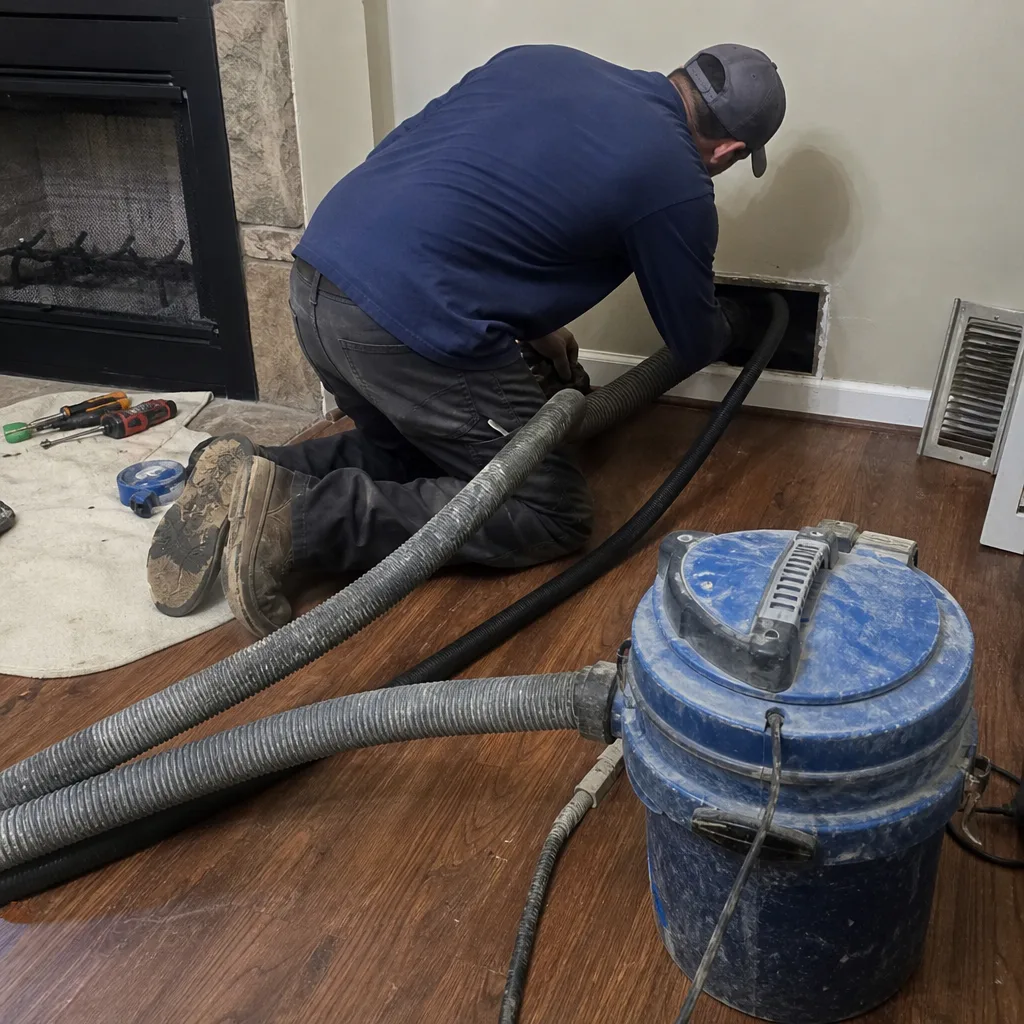 Before
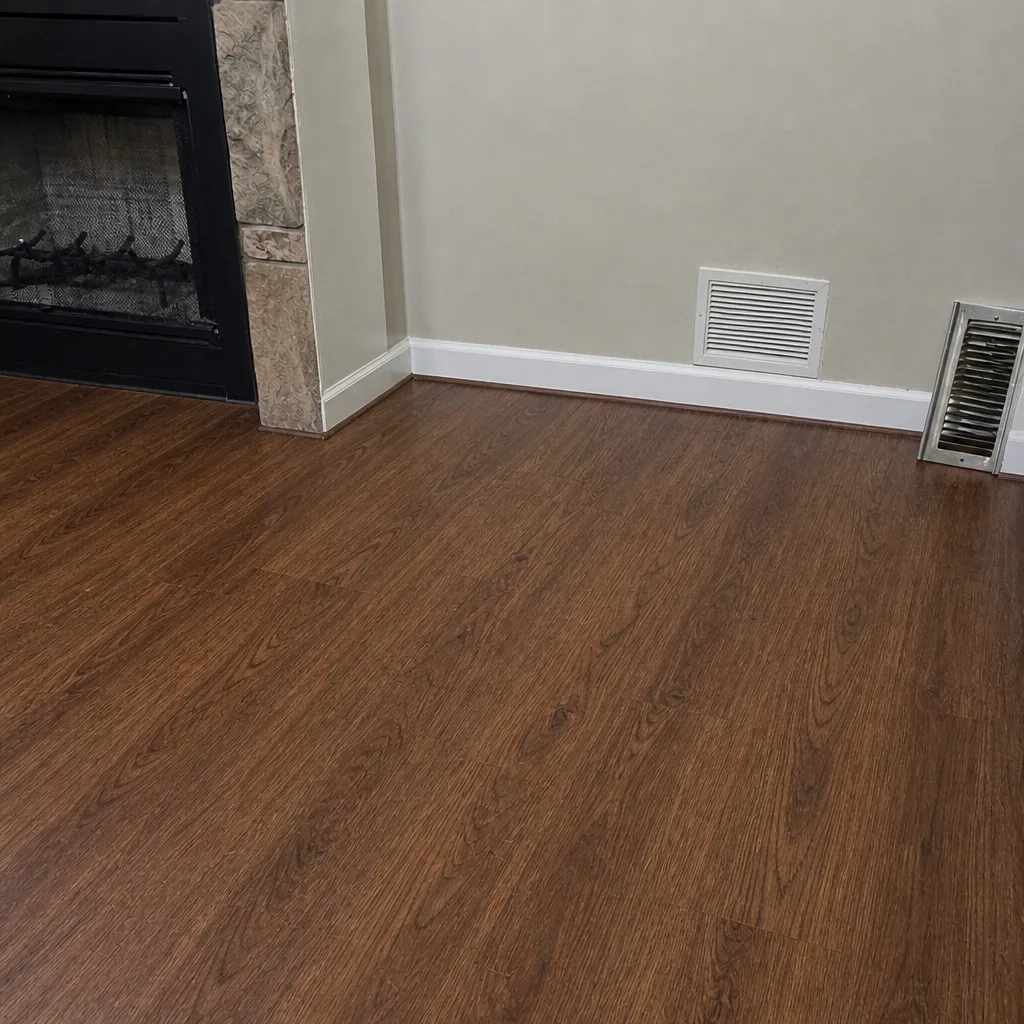 After
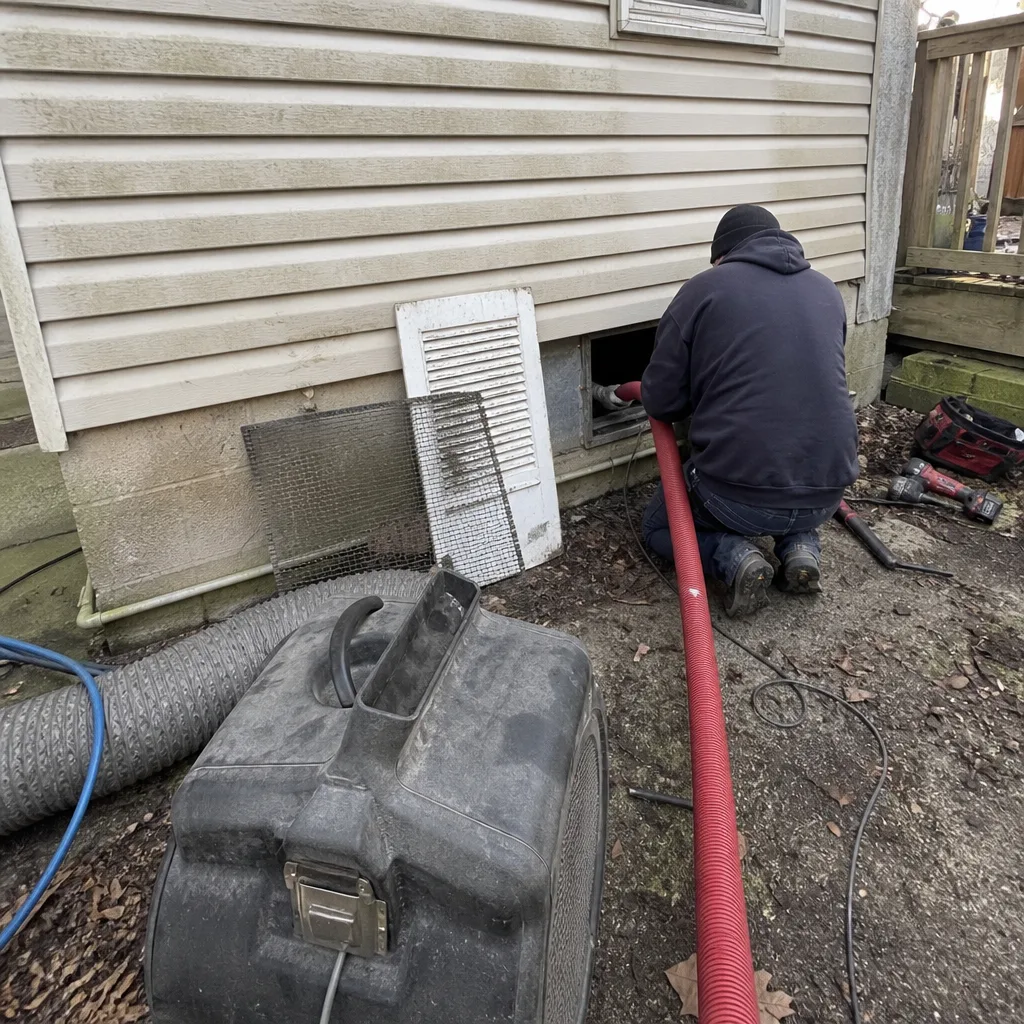 Before
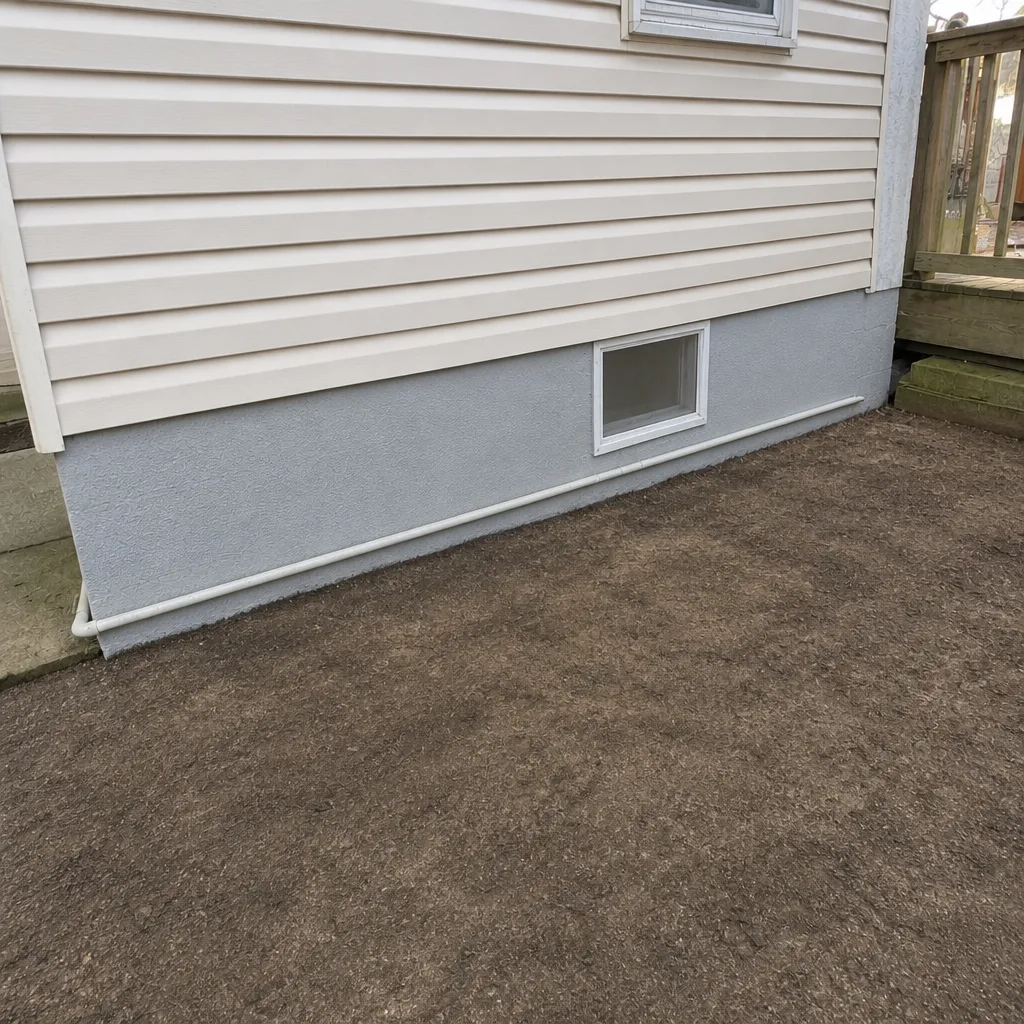 After
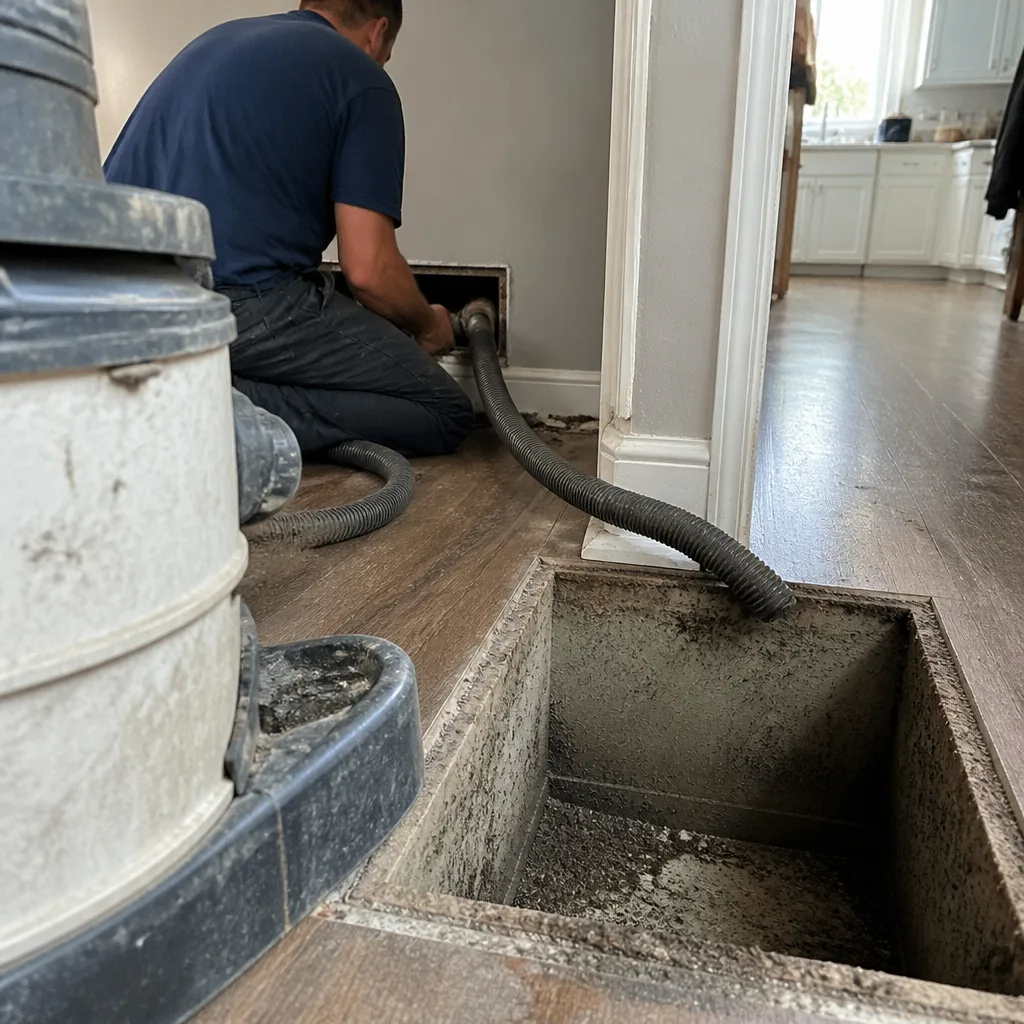 Before
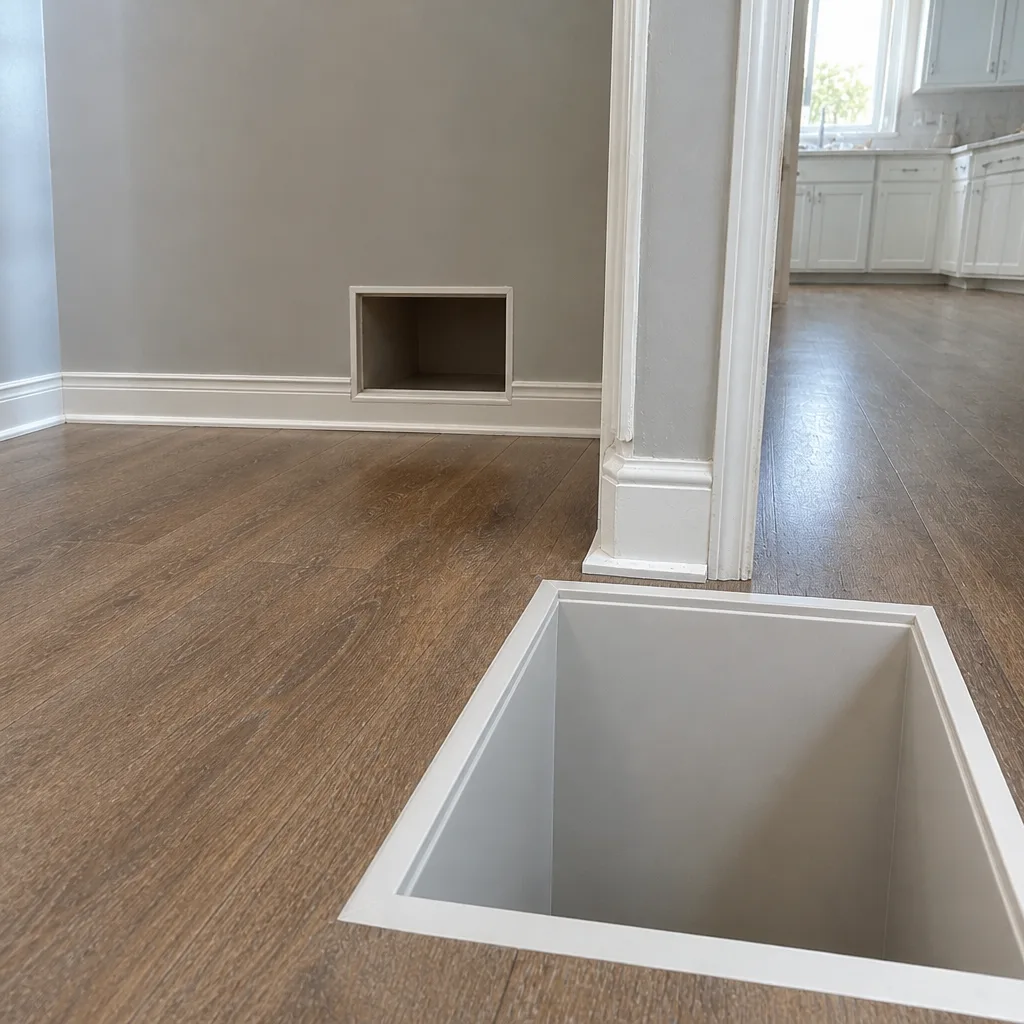 After